Category: Health & Wellness

  • Perimenopause Sore Nipples: Why It Happens and When to Get It Checked

    Perimenopause Sore Nipples: Why It Happens and When to Get It Checked

    A 2026 U.S. guide to nipple tenderness during the menopause transition, including hormone-related patterns, other common causes, relief options, and breast changes that should not be ignored.

    Important: Perimenopause can cause breast and nipple tenderness, but new or persistent nipple changes should not automatically be blamed on hormones. A lump, spontaneous nipple discharge, nipple inversion, persistent scaling or crusting, skin dimpling, or a focal change in one breast needs medical evaluation.

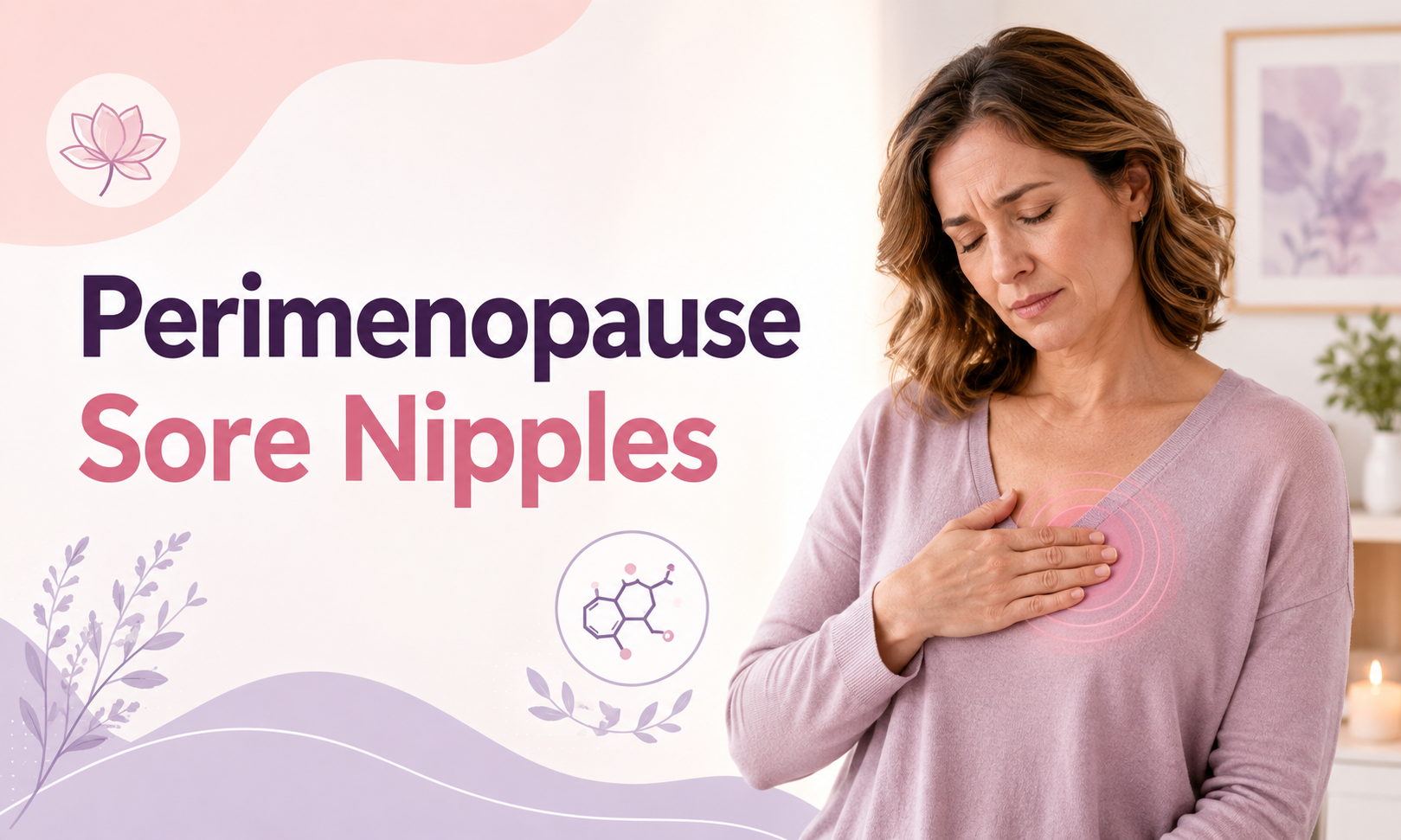
    Perimenopause sore nipples can be an unexpected symptom of changing hormone levels. A person may go months without noticing any breast discomfort and then suddenly find that a bra, shirt, shower spray, exercise, or even light touch makes the nipples feel unusually sensitive. The soreness may come with breast fullness, aching, tingling, or a heavy feeling, and it can disappear just as unpredictably as it arrived.

    The reason is often hormonal fluctuation rather than a steady loss of estrogen. During perimenopause, estrogen and progesterone can rise and fall unevenly as ovulation becomes less predictable. Breast tissue responds to those hormone shifts, which is why tenderness can feel familiar to premenstrual breast pain even when periods are becoming irregular.

    Still, the pattern matters. Tenderness in both breasts that comes and goes around changing cycles is different from a persistent sore spot in one nipple with skin changes or discharge. The most useful way to think about perimenopause nipple pain is not simply, “Is this normal?” but, “What pattern does this symptom follow, and are there any warning signs alongside it?”

    Key Takeaways

    • Hormone fluctuations during perimenopause can make the nipples and breasts feel sore, swollen, heavy, tingly, or unusually sensitive.
    • Hormone-related tenderness is often bilateral and may come and go with irregular menstrual cycles, although the pattern can be less predictable than it was earlier in life.
    • Pregnancy, friction, eczema or contact dermatitis, breast cysts, medications, hormone therapy, infection, and other breast conditions can also cause nipple soreness.
    • Breast cancer does not usually present as pain alone, but persistent pain or nipple changes still deserve evaluation, especially if they are one-sided or accompanied by a lump, discharge, inversion, scaling, swelling, or skin dimpling.
    • Simple measures such as a supportive bra, reducing friction, cool or warm compresses, and appropriate over-the-counter pain relief may help mild hormone-related soreness.
    • Routine breast screening remains important during perimenopause even when tenderness appears to be hormonal.

    Why Can Perimenopause Make Your Nipples Sore?

    Breast tissue is sensitive to estrogen and progesterone. In a typical ovulatory cycle, those hormones change in a more predictable sequence. During perimenopause, ovulation can become irregular, hormone levels can swing more sharply, and the balance between estrogen and progesterone can vary from cycle to cycle.

    Those fluctuations can affect glandular breast tissue and fluid retention. The result may be swelling, fullness, aching, or increased nipple sensitivity. Some people notice tenderness just before a delayed period. Others experience it in cycles that no longer match their old premenstrual pattern.

    Perimenopause itself can last for years, so nipple soreness may recur rather than follow a single short episode. After menopause, when ovarian hormone fluctuations settle, cyclical breast tenderness often becomes less common. New nipple pain after menopause should therefore be assessed on its own merits rather than automatically attributed to the same hormonal pattern.

    The Menopause Society explains the broader hormone changes and symptom variability of the menopause transition in its perimenopause patient resource.

    What Does Hormone-Related Nipple Soreness Usually Feel Like?

    No single symptom proves that hormones are the cause, but certain patterns make perimenopause-related tenderness more plausible.

    Pattern More consistent with hormone-related tenderness Reason to get it checked
    Location Both nipples or both breasts feel tender, heavy, or sensitive. Persistent pain clearly limited to one nipple or one focal area.
    Timing Comes and goes, sometimes near a period or during an irregular cycle. Persists without improvement or steadily worsens.
    Skin No new persistent rash, crusting, ulcer, or puckering. Scaling, crusting, redness, thickening, dimpling, or a nonhealing skin change.
    Nipple shape No lasting change in the direction or shape of the nipple. A nipple becomes newly flattened or turns inward.
    Discharge No spontaneous abnormal discharge. Clear, bloody, or other spontaneous discharge, especially from one nipple.
    Lump General breast fullness without a new dominant mass. A new lump or thickened area in the breast or underarm.

    Can Sore Nipples Happen Even If Your Period Is Late or Skipped?

    Yes. Perimenopause makes menstrual timing less predictable, but the ovaries can still produce substantial hormone shifts even in a cycle that does not end with a period on the schedule you expect. That means breast tenderness can appear even when bleeding is delayed or skipped.

    It is also possible to ovulate during perimenopause. If pregnancy is possible and a period is late, nipple tenderness should not be used to distinguish perimenopause from pregnancy. A home pregnancy test and follow-up with a clinician, when appropriate, are more useful than trying to interpret breast symptoms alone.

    What If Only One Nipple Is Sore?

    One-sided soreness can still have a benign explanation. Friction from a bra or sports clothing, dry skin, eczema, a minor injury, an irritated hair follicle, or a localized breast cyst can cause discomfort that is much more noticeable on one side.

    However, a persistent one-sided nipple symptom deserves more attention than temporary bilateral tenderness because it is less typical of generalized hormone fluctuation. The concern increases when the soreness is accompanied by a new lump, spontaneous discharge, a change in nipple direction, persistent redness, crusting, thickening, or another visible skin change.

    What Else Can Cause Sore Nipples During Perimenopause?

    Being in perimenopause does not make every breast symptom hormonal. Common alternatives include:

    • Friction or pressure from a poorly fitting bra, exercise clothing, running, or repeated rubbing against fabric.
    • Dry skin, eczema, contact dermatitis, or a reaction to detergent, body wash, fragrance, topical products, or adhesives.
    • Breast cysts and fibrocystic breast changes, which can cause tenderness, swelling, or sensitive nipples.
    • Hormone therapy or other medications that can increase breast tenderness.
    • Recent breast injury, chest-wall muscle strain, or nerve irritation that feels as though it is coming from the breast.
    • Infection, especially when tenderness is accompanied by warmth, redness, swelling, drainage, or fever.
    • Pregnancy, which can still occur during the menopause transition before menopause is established.

    Can Menopause Hormone Therapy Make Nipples Tender?

    Yes. Breast tenderness is a recognized side effect of systemic menopause hormone therapy. It may be more noticeable after starting treatment or changing the dose or formulation. The Menopause Society notes that lowering the dose or changing the form of hormone therapy may reduce bothersome side effects in some patients.

    Do not change prescribed hormone therapy on your own solely because of breast tenderness. The right approach depends on why you are taking it, your medical history, your breast cancer risk, the type of estrogen or progestogen used, and whether any new breast findings are present.

    Does Perimenopause Nipple Pain Mean Breast Cancer?

    Most breast and nipple soreness is not caused by cancer. The National Cancer Institute notes that breast cancer does not usually cause pain. Hormonal changes, cysts, medications, skin irritation, and other noncancerous conditions are much more common explanations for tenderness.

    Pain alone, however, should not be used as a rule-out test. Breast cancer can cause many different changes, and some uncommon forms may involve the nipple or breast skin. The practical rule is to pay attention to persistent or focal symptoms and to any visible or palpable change that develops along with the pain.

    For a current list of nipple, skin, and breast changes that should be assessed, see the National Cancer Institute breast cancer symptoms page.

    When Could Nipple Soreness Be More Than Hormones?

    A persistent nipple rash deserves particular attention when it affects one side and does not improve as expected with ordinary skin care. Paget disease of the breast is rare, but it can cause redness, itching, tingling, flaking, crusting, or thickened skin on or around the nipple and may be mistaken for eczema.

    Inflammatory breast cancer is also uncommon but can cause rapid breast swelling, skin color changes, heaviness, burning, tenderness, an inverted nipple, or peau d orange style dimpling. These conditions are not the most likely explanation for routine perimenopausal soreness, but they are why a new, persistent, visible breast change should not be self-treated indefinitely.

    What Can Help Relieve Perimenopause Sore Nipples at Home?

    For mild soreness without warning signs, simple measures can reduce friction and discomfort while you watch the pattern.

    • Wear a well-fitting, supportive bra and consider a softer seamless style if seams or lace are irritating the nipple.
    • For exercise, use moisture-wicking clothing that does not rub and make sure the sports bra is supportive without excessive compression.
    • Try a cool pack or warm compress for short periods, using a layer of cloth to protect the skin.
    • Use a bland, fragrance-free moisturizer or petrolatum on dry intact skin if irritation appears to be part of the problem.
    • Switch temporarily to fragrance-free detergent and gentle body products if contact dermatitis is possible.
    • If you can safely take them, over-the-counter pain relievers such as acetaminophen or an NSAID may help short-term soreness. Check with a clinician or pharmacist if you have kidney disease, ulcers, take blood thinners, have cardiovascular concerns, or have another reason these medicines may not be appropriate.
    • Keep a short symptom log noting the side affected, menstrual timing, new medications or hormone therapy, exercise, skin changes, and how long the soreness lasts.

    Should You Cut Caffeine or Change Your Diet?

    Caffeine reduction is often suggested for breast pain, but research has not established it as a reliable treatment for everyone. If you notice a repeatable personal link between high caffeine intake and breast discomfort, reducing it is reasonable, but there is no need to assume coffee is the cause of perimenopause nipple soreness.

    The same principle applies to salt. A very salty diet may worsen fluid retention for some people, but dietary changes are not a substitute for evaluating a persistent focal breast symptom. Avoid restrictive diets or supplements marketed as hormone-balancing cures unless they have been reviewed with a clinician.

    When Should You Make a Doctor Appointment?

    Schedule a clinical breast evaluation if you notice any of the following:

    • Nipple or breast pain that is persistent, worsening, or repeatedly localized to the same spot.
    • A new lump, firm area, or thickening in the breast or underarm.
    • Spontaneous nipple discharge, especially if it is bloody, clear, or coming from one side.
    • A newly inverted, flattened, or otherwise changed nipple.
    • Persistent redness, scaling, crusting, ulceration, or thickened skin on the nipple or areola.
    • Dimpling, puckering, rapid swelling, or a clear change in one breast’s size or shape.
    • Warmth, marked redness, fever, drainage, or other signs that could indicate infection.
    • Breast symptoms that begin after menopause and do not have an obvious temporary cause.

    How Is Persistent Nipple Pain Evaluated?

    A clinician will usually begin with the pattern: when the soreness began, whether it affects one or both sides, whether it varies with menstrual bleeding, and whether there is discharge, a lump, skin change, pregnancy possibility, medication change, or hormone therapy use.

    The physical examination may include the breast, nipple, areola, underarm, chest wall, and nearby lymph-node areas. If imaging is needed, the choice can depend on age, the exact symptom, breast density, examination findings, and whether the issue is screening or diagnosis. A diagnostic mammogram or ultrasound may be used for a specific breast complaint rather than waiting for the next routine screening exam.

    If the nipple skin itself has a persistent abnormal appearance, the evaluation may also involve dermatologic assessment or tissue sampling. The purpose is to identify the cause rather than simply label the symptom as hormonal.

    Do Sore Nipples Change When You Should Get a Mammogram?

    A new symptom and routine screening are two different issues. If you have a concerning breast change, contact a clinician rather than waiting for the next scheduled screening mammogram. Symptom-driven imaging may be diagnostic rather than routine screening.

    For average-risk women in the United States, the U.S. Preventive Services Task Force recommends screening mammography every two years from ages 40 through 74. People at higher risk may need a different plan based on family history, genetic risk, prior chest radiation, previous breast findings, or other factors.

    Current U.S. screening guidance is available from the U.S. Preventive Services Task Force.

    Questions People Commonly Ask About Perimenopause Sore Nipples

    How long can sore nipples last in perimenopause?

    There is no fixed duration. Hormone-related soreness may last days, recur across several irregular cycles, or come and go over months. A symptom that persists in one exact location or keeps worsening should be evaluated rather than assumed to be hormonal.

    Why are my nipples suddenly sensitive at age 45?

    Hormonal fluctuation during the menopause transition is one possible explanation, especially if periods are becoming less predictable. Friction, skin irritation, pregnancy, medication changes, cysts, and other breast conditions can produce the same symptom, so age alone does not identify the cause.

    Can perimenopause make nipples burn or tingle?

    Yes, hormonal breast sensitivity may be described as burning, tingling, aching, or soreness. Persistent burning on one side, especially with rash, discharge, skin change, or a lump, should be checked.

    Can sore nipples happen without sore breasts?

    Yes. The nipple contains many sensory nerve endings, so some people notice nipple sensitivity more than general breast pain. Local friction or dermatitis can also affect the nipple while the rest of the breast feels normal.

    Why do my nipples hurt before an irregular period?

    Even when cycles are irregular, changing estrogen and progesterone levels can still affect breast tissue. The timing may become less predictable because ovulation does not occur on the same schedule every month during perimenopause.

    Do sore nipples stop after menopause?

    Hormone-linked cyclical tenderness often becomes less common after ovarian hormone fluctuations settle. New or persistent nipple soreness after menopause should be discussed with a clinician, particularly if it is focal or accompanied by another breast change.

    Can a bra cause nipple pain during perimenopause?

    Yes. Hormonal sensitivity can make the skin and nipple less tolerant of friction that never bothered you before. A better-fitting bra, smoother fabric, and moisture control during exercise can help if rubbing is a major contributor.

    Should I worry if only one nipple hurts?

    Not automatically, because irritation, eczema, trauma, or a benign breast condition can be one-sided. However, persistent unilateral pain is less typical of generalized hormonal tenderness and should be assessed if it does not resolve or if any nipple, skin, or lump changes are present.

    The Bottom Line

    Perimenopause can absolutely make nipples sore. Fluctuating estrogen and progesterone can increase breast sensitivity, fullness, and tenderness even when cycles are irregular. The most reassuring pattern is usually temporary, bilateral soreness without a lump, discharge, persistent rash, nipple inversion, or other structural change.

    The safest approach is to watch the pattern rather than dismiss the symptom because of age. If soreness becomes persistent, remains focused on one side, or comes with a visible or palpable change, arrange a breast evaluation. And regardless of symptoms, keep up with the screening schedule that is appropriate for your age and personal breast cancer risk.

    Editorial Note

    This article is for general educational purposes and does not diagnose breast disease or replace personalized care from a licensed clinician. It was prepared for a U.S. audience using current 2026-accessible information from major menopause, cancer, and preventive-health authorities.

  • Digestive Enzymes and Weight Loss: Benefits, Limits, and What the Evidence Shows

    Digestive Enzymes and Weight Loss: Benefits, Limits, and What the Evidence Shows

    The relationship between digestive enzymes and weight loss is often misunderstood. Digestive enzyme supplements can be useful for certain enzyme deficiencies and digestive disorders, but they are not established fat-loss supplements. This guide explains what they actually do, who may benefit, and why improved digestion is different from losing body fat.

    Digestive enzymes are often marketed with phrases such as better digestion, less bloating, improved nutrient absorption, and metabolic support. Those claims can make it sound as though taking extra enzymes should also make weight loss easier. The physiology is not that simple.

    For most people with normal pancreatic and intestinal function, the body already produces the enzymes needed to digest carbohydrates, fats, and proteins. Taking more enzymes has not been shown to create a meaningful calorie deficit or directly increase fat loss. In people who truly lack certain digestive enzymes, treatment can improve digestion and nutrient absorption. In some cases, such as exocrine pancreatic insufficiency, correcting poor absorption may actually help a person regain lost weight rather than lose it. The National Institute of Diabetes and Digestive and Kidney Diseases explains how digestive enzymes are used in exocrine pancreatic insufficiency.

    Key Takeaways

    • Digestive enzymes help break food into smaller components that the body can absorb, but they do not directly burn body fat.
    • There is not good evidence that routine over-the-counter digestive enzyme supplements produce clinically meaningful weight loss in otherwise healthy adults.
    • People with conditions such as exocrine pancreatic insufficiency or specific enzyme deficiencies may benefit from targeted enzyme therapy.
    • A reduction in bloating or abdominal fullness can make the stomach feel flatter, but that is not the same as losing fat tissue.
    • Prescription pancreatic enzyme replacement therapy can improve nutrient absorption and may help people with malabsorption maintain or regain weight.
    • Over-the-counter enzyme products are dietary supplements, so their quality, dose, and evidence can vary substantially between products.

    What are digestive enzymes, and what do they actually do?

    Digestive enzymes are proteins that speed up the chemical breakdown of food. Enzymes are produced in several parts of the digestive system, with the pancreas playing a major role. After food is broken into smaller molecules, nutrients can be absorbed through the small intestine and used for energy, tissue repair, hormone production, and other functions.

    Enzyme Main job Common source Weight-loss effect
    Amylase Breaks down starches and other carbohydrates Saliva and pancreas No proven direct fat-loss effect
    Lipase Breaks down dietary fats Pancreas Improves fat digestion when deficient; not a fat burner
    Proteases Break down proteins into smaller peptides and amino acids Stomach and pancreas No established weight-loss benefit
    Lactase Breaks down lactose in dairy Small intestine; OTC lactase products Can reduce lactose-related symptoms but does not cause fat loss
    Sucrase-isomaltase Helps digest sucrose and certain starch products Small intestine Used for specific digestive function, not weight management

    Do digestive enzymes help you lose weight?

    For the average healthy adult, there is no strong evidence that taking extra digestive enzymes leads to meaningful weight loss. Weight loss occurs when the body uses more energy than it takes in over time. Digestive enzymes mainly change how food is broken down and absorbed. They do not create the kind of sustained energy deficit required for body-fat loss.

    This is also why the marketing phrase ‘supports metabolism’ can be misleading. Enzymes are involved in many metabolic reactions, but taking a digestive enzyme capsule does not automatically raise calorie expenditure. In a person who already produces adequate enzymes, additional supplementation may simply provide enzymes the body did not need.

    Why can digestive enzymes sometimes make your stomach feel flatter?

    Some people notice less gas, bloating, or post-meal discomfort after using a targeted enzyme that addresses a specific food intolerance or digestive problem. If abdominal distention decreases, clothes may fit differently and the scale may move slightly because of changes in gut contents or fluid. That short-term change should not be interpreted as loss of body fat.

    For example, a person with lactose intolerance may feel less bloated after using lactase with dairy. The benefit comes from improved lactose digestion, not from an increase in fat burning.

    Can digestive enzymes ever lead to weight gain instead?

    They can in people who were losing weight because they were not absorbing nutrients properly. Exocrine pancreatic insufficiency, often shortened to EPI, occurs when the small intestine cannot fully digest food because the pancreas does not provide enough digestive enzymes. Symptoms may include diarrhea, greasy or foul-smelling stools, gas, abdominal discomfort, and unintended weight loss.

    Doctors typically treat EPI with prescription pancreatic enzyme replacement therapy, or PERT. By improving digestion and nutrient absorption, PERT can help prevent malnutrition and support weight maintenance or weight regain. In this situation, gaining weight can be a sign that treatment is correcting malabsorption.

    Who may actually benefit from digestive enzyme products?

    Digestive enzyme therapy is most useful when there is a specific reason the body is not digesting a particular nutrient normally. The product and dose should match that problem.

    • Exocrine pancreatic insufficiency: Prescription PERT replaces pancreatic enzymes that are not being produced in adequate amounts.
    • Lactose intolerance: Lactase products can help some people digest lactose-containing foods more comfortably.
    • Certain inherited enzyme deficiencies: Specialized treatment may be used under medical supervision when a specific intestinal enzyme is deficient.
    • Selected food-related gas symptoms: Some OTC enzyme products target specific carbohydrates, although benefit depends on the food and the individual.

    Persistent digestive symptoms should not automatically be treated with a multi-enzyme supplement. Similar symptoms can occur with celiac disease, inflammatory bowel disease, irritable bowel syndrome, gallbladder disease, chronic pancreatitis, small intestinal bacterial overgrowth, medication effects, and other conditions that require different care.

    Are over-the-counter digestive enzyme supplements regulated like medications?

    No. In the United States, most nonprescription digestive enzyme products are sold as dietary supplements rather than approved drugs. The FDA does not approve dietary supplements for safety and effectiveness before they are marketed in the same way it approves prescription medications. Manufacturers are responsible for meeting applicable requirements, but formulation quality and the strength of supporting evidence can vary. The FDA explains how dietary supplements are regulated and what consumers should know before using them.

    A label that lists a long blend of protease, lipase, amylase, bromelain, papain, and other enzymes does not mean the product will help with weight loss. It also does not prove that the amount of each enzyme is appropriate for a medical condition.

    What about digestive enzyme supplements marketed specifically for weight loss?

    Weight-loss supplements often combine multiple ingredients and may use digestive, detox, carb-blocking, or metabolism language. Evidence for weight-loss supplements varies widely, and some products have little high-quality human research. A supplement that changes bowel habits, reduces water weight, or causes appetite changes can produce a short-term scale change without meaningfully reducing body fat.

    The National Institutes of Health Office of Dietary Supplements notes that evidence for many weight-loss supplement ingredients is limited, mixed, or insufficient, and some ingredients can cause side effects or interact with medications. Review the NIH fact sheet on dietary supplements marketed for weight loss.

    Are digestive enzymes the same as enzyme inhibitors used for weight management?

    No. Digestive enzyme supplements generally add an enzyme or replace one that is missing. An enzyme inhibitor does the opposite by blocking an enzyme’s activity. This distinction matters because some weight-management medications work by reducing the digestion or absorption of a nutrient. Their mechanisms, evidence, dosing, and side effects are different from OTC digestive enzyme blends.

    Using an enzyme supplement and using a medication that intentionally inhibits an enzyme are not interchangeable strategies. Anyone considering a medication for obesity or weight management should discuss eligibility, benefits, side effects, and contraindications with a qualified clinician.

    Can digestive enzymes improve metabolism?

    Digestive enzymes are necessary for normal digestion, but more is not automatically better. If the body already produces enough enzymes, taking additional enzymes has not been shown to meaningfully raise resting metabolic rate or increase daily calorie expenditure.

    Metabolic health is influenced by many factors, including muscle mass, physical activity, sleep, hormones, medications, age, genetics, calorie intake, and overall diet quality. A digestive supplement cannot substitute for those larger drivers of body weight.

    What are the possible side effects of digestive enzyme supplements?

    Side effects vary by ingredient and dose. Depending on the product, people may experience abdominal discomfort, cramping, nausea, diarrhea, constipation, gas, or allergic reactions. Plant-derived enzymes such as bromelain or papain may also be inappropriate for some people because of allergy risks or potential interactions.

    People who are pregnant, breastfeeding, taking prescription medications, preparing for surgery, or managing a chronic GI, liver, pancreatic, bleeding, or metabolic condition should check with a clinician or pharmacist before starting a supplement.

    When could digestive symptoms signal an enzyme problem?

    Occasional bloating after a large meal does not necessarily mean someone is enzyme deficient. A medical evaluation becomes more important when symptoms are persistent, severe, or accompanied by signs of malabsorption.

    • unintentional weight loss
    • frequent diarrhea
    • greasy, oily, pale, or unusually foul-smelling stools
    • stools that are difficult to flush or appear to contain visible fat
    • persistent abdominal pain or cramping
    • ongoing bloating with nutritional deficiencies
    • a history of chronic pancreatitis, pancreatic surgery, cystic fibrosis, or pancreatic disease

    In these situations, self-treating with a broad OTC enzyme blend can delay the correct diagnosis. Clinicians can evaluate the underlying cause and determine whether testing for pancreatic function, malabsorption, lactose intolerance, celiac disease, or another condition is appropriate.

    What actually helps with healthy weight loss?

    For people trying to lose excess body fat, digestive enzyme supplements are not a replacement for a sustainable weight-management plan. A practical plan usually focuses on an eating pattern that supports an appropriate calorie intake, adequate protein and fiber, regular physical activity, sufficient sleep, and attention to medications or medical conditions that may affect weight.

    For some U.S. adults with overweight or obesity, evidence-based prescription weight-management medication or metabolic and bariatric surgery may also be appropriate. Those decisions depend on health history, BMI, obesity-related conditions, previous treatment attempts, medication risks, insurance coverage, and personal goals.

    Common Questions About Digestive Enzymes and Weight Loss

    Will digestive enzymes speed up my metabolism?

    There is no good evidence that routine digestive enzyme supplements meaningfully increase metabolic rate in people who already make enough digestive enzymes.

    Can digestive enzymes reduce belly fat?

    No supplement enzyme has been shown to selectively reduce abdominal fat. Less gas or bloating may temporarily make the abdomen look or feel smaller, but that is different from losing visceral or subcutaneous fat.

    Should I take digestive enzymes with every meal?

    Not unless there is a specific reason. Prescription pancreatic enzymes are taken with meals and snacks according to a clinician’s instructions. OTC products should be used only when the ingredient, dose, and intended food match the reason for taking them.

    Do digestive enzymes help with constipation?

    They are not a standard treatment for constipation. If constipation is the main issue, hydration, dietary fiber, physical activity, medications, and possible underlying causes should be considered instead.

    Are probiotics and digestive enzymes the same?

    No. Digestive enzymes are proteins that help break down food. Probiotics are live microorganisms intended to affect the gut microbial community. Some products combine both, but they have different functions.

    Can I take digestive enzymes while using a weight-loss medication?

    That depends on the specific enzyme product, medication, and medical history. A clinician or pharmacist can check for interactions and determine whether the supplement is necessary.

    What is the bottom line on digestive enzymes for weight loss?

    Digestive enzymes have an important job, but weight loss is not one of their established benefits. They can be valuable when a person has a true enzyme deficiency or a condition that interferes with digestion, and targeted products such as lactase can make certain foods easier to tolerate. For most healthy adults, however, taking extra enzymes has not been shown to produce meaningful fat loss.

    If a digestive enzyme seems to make the stomach feel flatter, the change may reflect less bloating rather than less body fat. If digestive symptoms are severe, persistent, or accompanied by unintended weight loss or greasy stools, the priority should be identifying the cause rather than adding more supplements.

    Medical Note

    This article is for general educational purposes and is not a substitute for medical advice, diagnosis, or treatment. Digestive symptoms, unexplained weight change, or possible malabsorption should be discussed with a qualified health care professional.

    Editorial Sources

    The 2026 update was informed by current U.S. guidance from the National Institute of Diabetes and Digestive and Kidney Diseases, the U.S. Food and Drug Administration, and the National Institutes of Health Office of Dietary Supplements. The HealthCentral reference was used for search intent and topic coverage only.