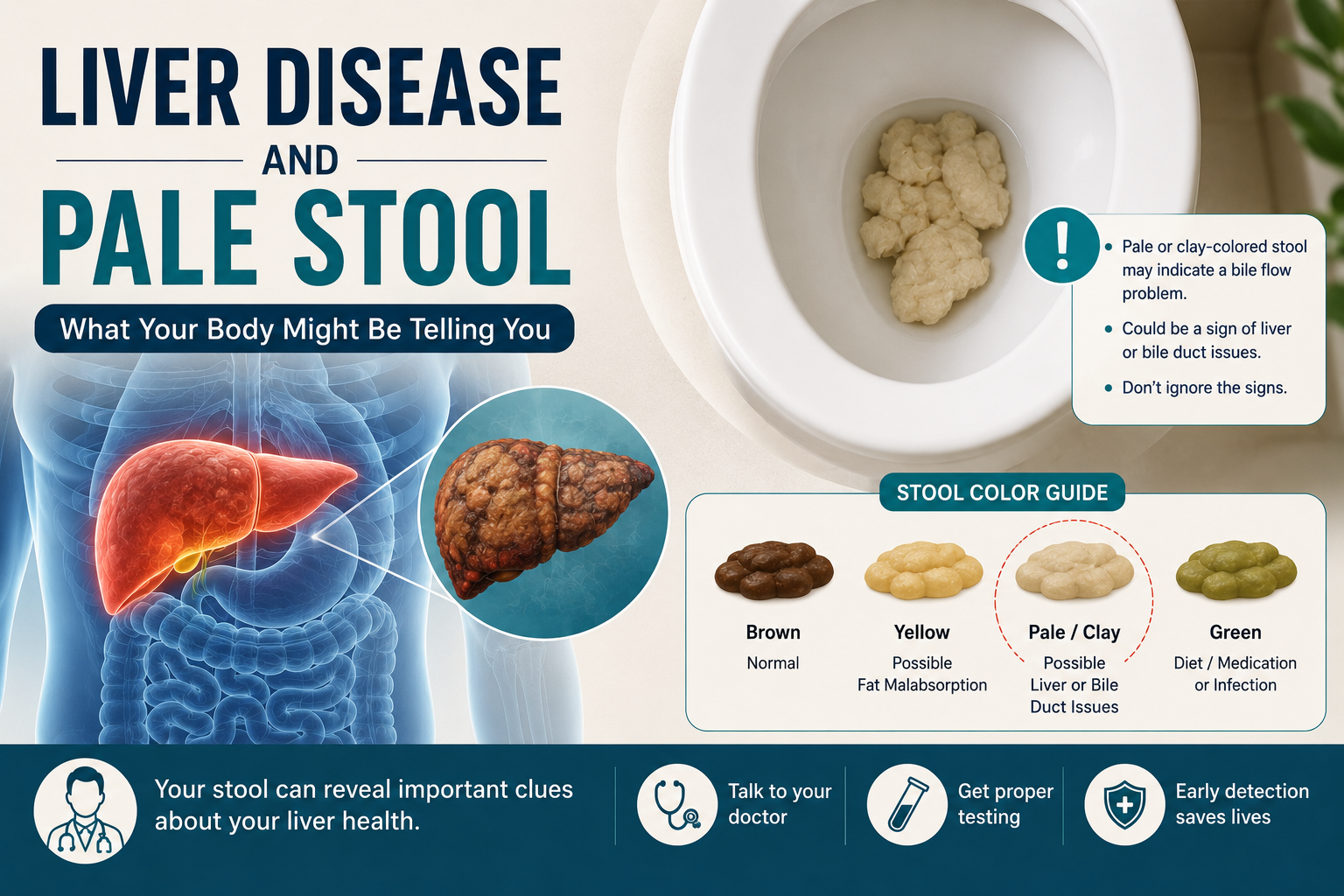
People searching for information about liver disease and pale stool are often concerned that an unusually light bowel movement could signal reduced bile flow. Pale stool can be associated with liver or bile duct problems, but color alone cannot diagnose liver disease. This 2026 U.S.-focused guide explains the visual differences between pale, clay-colored, yellow, greasy, and normal brown stool, plus the symptoms that should prompt medical care.
People searching for liver disease pale stool pictures are often trying to decide whether an unusual bowel movement is simply a temporary color change or a sign that bile flow has been reduced. Normal stool is usually some shade of brown because bile pigments are changed as they pass through the digestive tract. When little or no bile reaches the intestine, stool may become unusually light, gray, putty-colored, or nearly white.
A single lighter-than-usual bowel movement is not enough to diagnose a liver, gallbladder, bile duct, or pancreatic problem. Persistently pale or clay-colored stools deserve more attention, especially when they occur with dark urine, yellow skin or eyes, itching, fever, or abdominal pain. MedlinePlus explains that pale, clay, or putty-colored stool can occur with problems in the biliary system.
Key Takeaways
- Truly pale stool is usually described as clay-colored, putty-colored, gray, very light beige, or almost white rather than simply light brown.
- Reduced bile reaching the intestine is an important reason stool can lose its normal brown color.
- Liver disease is only one possible cause. Gallstones, bile duct obstruction, pancreatic disease, certain medications, and medical procedures can also change stool color.
- Yellow stool is not the same as clay-colored stool. Yellow stool may occur with diet changes, diarrhea, rapid intestinal transit, infections, or fat malabsorption.
- Pale stool together with jaundice or dark urine is more concerning than an isolated light-colored bowel movement.
- Persistent white, gray, or clay-colored stool should be discussed with a health care professional rather than diagnosed from pictures alone.
What does pale stool from reduced bile look like?
There is no single exact shade that proves bile flow is abnormal. Lighting, toilet water, diet, camera settings, and the natural variation of stool can all affect what a picture looks like. Instead of matching one online image, focus on whether the stool has clearly lost its usual brown pigment and whether the change keeps happening.
| Appearance | Typical description | What it may suggest | How concerning is it? |
| Normal brown | Tan-brown to dark brown | Normal bile pigment in the digestive tract | Usually normal if consistent for you |
| Light brown or beige | Brown is still clearly visible but lighter than usual | Diet, temporary digestive change, or normal variation | Often less concerning if brief and no other symptoms |
| Clay or putty-colored | Very pale beige, gray-beige, or putty-like | Reduced bile entering the intestine can be one cause | Needs evaluation if persistent |
| Gray or almost white | Little visible brown pigment | Bile duct, liver, gallbladder, or pancreatic problems may need to be ruled out | More concerning, especially with jaundice or dark urine |
| Yellow and greasy | Yellow, oily, floating, difficult to flush, sometimes foul-smelling | Fat malabsorption or rapid transit may be involved | Needs evaluation if recurrent or associated with weight loss |
| Bright yellow loose stool | Yellow diarrhea rather than pale formed stool | Diet, infection, rapid intestinal transit, or other GI causes | Context and duration matter |
Why does liver or bile duct disease make stool pale?
The liver produces bile, a fluid that helps the body digest fats. Bile travels through small ducts into larger bile ducts and eventually reaches the small intestine. Pigments from bile contribute to the brown color of stool.
If bile production is severely impaired or bile cannot flow normally through the ducts, less pigment reaches the intestine. The stool can therefore lose its brown color and become light, gray, clay-colored, or nearly white. This is sometimes called acholic stool.
The important point is that pale stool reflects a possible bile-flow problem, not one particular liver diagnosis. A blockage outside the liver can produce a similar color change to a disorder affecting bile formation inside the liver.
Which liver problems can be associated with pale stool?
Several liver conditions can interfere with bile production or bile flow, although pale stool is not present in every person with liver disease.
- Hepatitis: Inflammation of the liver from viral infection, medications, toxins, autoimmune disease, or other causes may sometimes occur with jaundice, dark urine, and pale or clay-colored stool.
- Cirrhosis: Advanced scarring can disrupt normal liver function and, in some cases, contribute to jaundice or bile-flow abnormalities.
- Cholestatic liver disease: Conditions that interfere with the formation or movement of bile can lead to itching, jaundice, dark urine, and pale stool.
- Liver or bile duct tumors: A mass can sometimes narrow or block bile drainage, although many other conditions can cause the same symptom pattern.
NIDDK notes that people with cirrhosis may develop jaundice and other signs of impaired liver function as disease progresses. Read the NIDDK overview of cirrhosis symptoms and causes.
Can gallstones cause pale or clay-colored stool?
Yes. Gallstones can block a bile duct and prevent bile from moving normally into the intestine. When a duct is blocked, a person may develop light-colored stool along with pain in the upper right or upper middle abdomen, nausea, vomiting, fever or chills, jaundice, or dark urine.
A blocked bile duct can lead to serious complications and should not be ignored. NIDDK lists light-colored stools among warning symptoms that can occur when gallstones cause complications.
Can pancreatic problems make stool look pale?
They can. The pancreas sits near the bile duct and supplies digestive enzymes to the small intestine. Pancreatic inflammation, a pancreatic mass, or another condition that interferes with bile drainage can sometimes contribute to pale stool.
Pancreatic disorders can also cause a different pattern called steatorrhea. This stool is usually greasy, oily, bulky, foul-smelling, difficult to flush, or prone to floating because excess fat remains in the stool. It may look yellowish or light, but greasy yellow stool is not automatically the same as bile-deprived clay-colored stool.
Is yellow stool a sign of liver disease?
Sometimes, but yellow stool has many non-liver causes. A one-time yellow bowel movement can follow certain foods or a bout of diarrhea. When stool passes through the intestine quickly, bile pigments may not undergo the same color changes that normally produce brown stool.
Yellow, greasy, floating stool can also occur with fat malabsorption. Possible causes include pancreatic enzyme problems, celiac disease, and other digestive disorders. By contrast, the classic bile-flow concern is stool that becomes unusually pale, gray, clay-colored, or white.
What other things can make stool look unusually pale?
- Medications and contrast materials: Some medicines or substances used for imaging tests can temporarily lighten stool.
- Recent diarrhea: Fast intestinal transit can temporarily change stool color and consistency.
- Dietary changes: Very light foods or a sudden change in diet can alter appearance, although diet alone usually does not produce repeated chalky-white stool.
- Lighting and toilet water: Bathroom lighting and dilution in water can make tan or yellow stool look paler in photographs than it does in person.
What symptoms make pale stool more concerning?
Stool color becomes more medically important when other symptoms point toward impaired bile flow, liver inflammation, infection, or obstruction.
- yellowing of the skin or whites of the eyes
- dark brown or tea-colored urine
- persistent itching without an obvious skin cause
- pain in the upper right or upper middle abdomen
- fever or chills
- nausea or vomiting that persists
- unexplained weight loss or loss of appetite
- abdominal swelling
- new confusion or unusual drowsiness
- repeated gray, white, or clay-colored bowel movements
Pale stool with jaundice and dark urine is a particularly important combination because it can occur when bilirubin is building up in the blood while too little bile pigment is reaching the intestine.
When should you call a doctor about pale stool?
Contact a health care professional if stool remains clay-colored, gray, white, or unusually pale for more than a short period, or if the change keeps returning. You should also seek medical care sooner when pale stool occurs with jaundice, dark urine, significant abdominal pain, fever, vomiting, or unexplained weight loss.
Severe abdominal pain, high fever, confusion, fainting, repeated vomiting, or signs of serious illness warrant urgent evaluation. A picture of the stool may be useful to show a clinician, but it does not replace examination and testing.
How do doctors evaluate persistent pale stool?
Evaluation depends on symptoms and medical history. A clinician may ask how long the color change has lasted, whether the stool is greasy or floating, what medications and supplements you take, alcohol use, recent travel or infection risk, and whether you have jaundice, abdominal pain, or weight loss.
- Blood tests: Liver enzymes, bilirubin, alkaline phosphatase, and other laboratory tests can help identify patterns of liver injury or impaired bile flow.
- Ultrasound: Abdominal ultrasound can look for gallstones, bile duct dilation, and some liver or gallbladder abnormalities.
- CT or MRI: Cross-sectional imaging may be ordered when a blockage, pancreatic problem, or other structural cause is suspected.
- Additional testing: Depending on the findings, doctors may use specialized bile-duct imaging, viral hepatitis tests, pancreatic tests, or other studies.
Can you diagnose liver disease from a pale stool picture?
No. Pictures can help illustrate color ranges, but they cannot determine why stool is pale. Several unrelated conditions can produce similar-looking bowel movements, and normal lighting differences can make online comparisons misleading.
A better approach is to note the color over several bowel movements, whether the stool is formed or loose, whether it floats or appears greasy, and whether symptoms such as jaundice, dark urine, pain, fever, itching, or weight loss are present. That information is much more useful to a clinician than trying to match one photograph.
Common Questions About Liver Disease and Pale Stool
What color is stool with liver disease?
There is no single liver-disease stool color. Some conditions that reduce bile reaching the intestine can produce pale, gray, clay-colored, or nearly white stool. Many people with liver disease continue to have brown stool.
Is light brown stool the same as clay-colored stool?
Usually not. Light brown stool still contains obvious brown pigment. Clay-colored stool is noticeably washed out, beige-gray, putty-like, or nearly white.
Can fatty liver disease cause pale stool?
Fatty liver disease does not automatically cause pale stool. If a person with known liver disease develops persistent clay-colored stool, jaundice, or dark urine, the change should be medically evaluated rather than assumed to come from fatty liver alone.
Does pale stool always mean a blocked bile duct?
No. Bile duct blockage is an important possibility, but medications, liver disease, pancreatic disease, and other conditions can also contribute. Testing is needed to identify the cause.
What does greasy yellow stool mean?
Greasy, oily, floating, or difficult-to-flush yellow stool may suggest excess fat in the stool, called steatorrhea. This can occur with pancreatic or intestinal malabsorption problems and is different from classic clay-colored stool.
Should I save a picture of unusual stool for my doctor?
A clear photo can help document an intermittent color change, especially if the stool looks different by the time of the appointment. It should be treated as supporting information, not as a diagnostic test.
What is the bottom line on pale stool and liver disease?
Liver disease can be associated with pale stool, but the more direct issue is usually reduced bile reaching the intestine. That can happen because of liver disease, gallstones, bile duct obstruction, or pancreatic and other biliary problems.
A one-time light stool may be harmless, especially if it is still clearly brown. Repeated gray, white, clay-colored, or putty-colored stool deserves attention, particularly when it appears with jaundice, dark urine, itching, abdominal pain, fever, or unexplained weight loss. Online pictures can help with visual comparison, but persistent color changes are best evaluated with medical history, blood tests, and imaging when needed.
Medical Note
This article is for general educational purposes and is not a substitute for medical advice, diagnosis, or treatment. Persistent pale stool or stool changes accompanied by jaundice, dark urine, fever, significant abdominal pain, or unexplained weight loss should be discussed with a qualified health care professional.
Editorial Sources
This 2026 update was informed by current U.S. information from MedlinePlus and the National Institute of Diabetes and Digestive and Kidney Diseases. The HealthCentral reference was used for search intent and topic coverage only.