

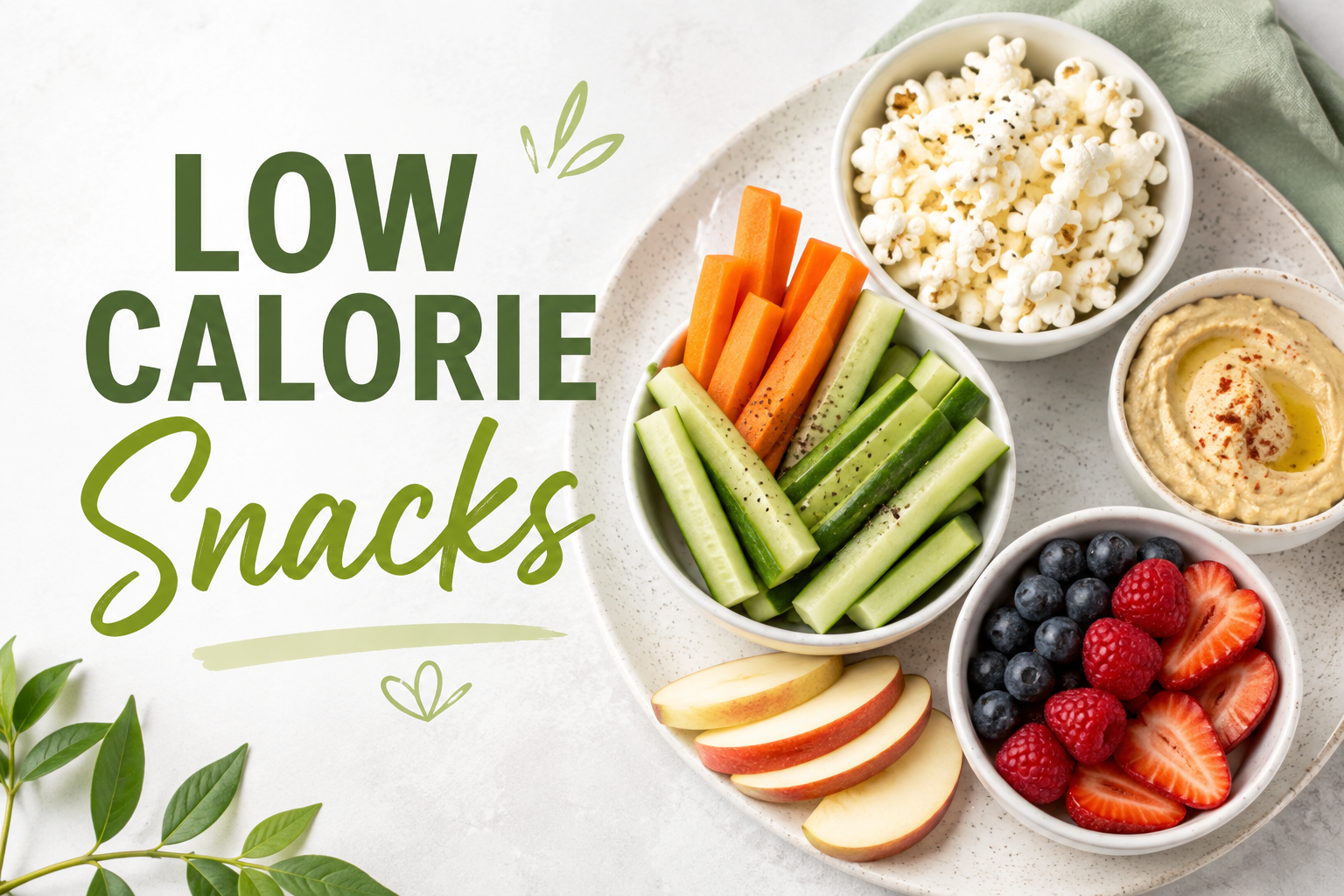
Looking for low calorie snacks does not have to mean settling for tiny portions or bland diet food. The best snack ideas give you enough volume, protein, fiber, or crunch to make the calories feel worthwhile, while still fitting comfortably into your day.
This 2026 U.S.-focused list keeps most choices around 50 to 150 calories per serving and favors everyday foods you can find at a regular grocery store. Calorie counts are estimates because brands, sizes, toppings, and preparation methods vary. For more practical food and wellness ideas, you can also explore Jiff Wellness.
Key Takeaways
- The most satisfying low-calorie snacks usually include protein, fiber, water-rich produce, or a combination of these.
- Most ideas below fall roughly between 50 and 150 calories, but brand and serving size can change the total.
- Whole foods such as fruit, eggs, yogurt, vegetables, edamame, and popcorn often provide more nutrition than highly processed snack packs.
- A snack does not have to stay under 100 calories to be useful. A slightly larger protein- or fiber-rich snack may control hunger longer.
What Makes a Low-Calorie Snack More Filling?
Calories show how much energy a food provides, but not how filling it will be. Protein, fiber, water, and food volume can make a modest-calorie snack feel much more substantial.
A useful rule is to spend snack calories on foods that give you something back, such as protein, fiber, vitamins, minerals, or healthy fats, instead of choosing a product only because the package says 100 calories.
For additional snack ideas, see the American Heart Association healthy snacking guide.
You can also review the current Dietary Guidelines for Americans, 2025 to 2030 for the latest federal nutrition guidance.
25 Low Calorie Snacks to Try
1. Air-Popped Popcorn
About 3 cups of plain air-popped popcorn is roughly 90 to 100 calories. It offers plenty of volume and whole-grain fiber. Season with cinnamon, paprika, or garlic powder instead of heavy butter.
2. Nonfat Greek Yogurt With Berries
Plain nonfat Greek yogurt with a few berries can stay near 100 to 130 calories while providing plenty of protein. Choose plain yogurt and let the fruit add sweetness.
3. A Small Apple
A small apple is roughly 75 to 90 calories and gives you fiber, water, and crunch. Keep the skin on if tolerated, and add cinnamon for a dessert-like flavor.
4. Apple Slices With Peanut Butter
Half an apple with about 1 teaspoon of peanut butter can land near 100 calories. Keep the nut-butter layer thin because calories climb quickly, even though a little adds flavor and staying power.
5. Baby Carrots With Hummus
A cup of baby carrots with 2 tablespoons of hummus is usually around 100 to 130 calories. Cucumber, bell pepper, or celery can be swapped in for even more volume.
6. Cucumber With Cottage Cheese
Top sliced cucumber with low-fat cottage cheese for a cool, protein-rich snack around 90 to 130 calories. Add pepper, dill, or a light seasoning blend.
7. One Hard-Boiled Egg
A large hard-boiled egg has roughly 70 to 80 calories and about 6 grams of protein. Pair it with cucumber or cherry tomatoes if you want more volume.
8. Grapes
About 1 cup of grapes contains roughly 100 calories. They are naturally sweet, water-rich, and easy to portion. Frozen grapes can make the snack feel more like a treat.
9. Watermelon
Two cups of diced watermelon are usually under 100 calories. Its high water content gives you a large, sweet, refreshing portion for relatively few calories.
10. Strawberries With Whipped Topping
A cup of strawberries is around 50 calories. Add a small spoonful of light whipped topping and the snack can still stay comfortably below 100 calories.
11. Cottage Cheese With Pineapple
Low-fat cottage cheese with a few pineapple chunks generally lands around 120 to 150 calories. Choose canned pineapple packed in juice rather than heavy syrup.
12. Edamame
A half-cup of shelled edamame is typically around 90 to 110 calories and provides plant protein plus fiber, making it a satisfying savory option.
13. Roasted Seaweed With a Light Cheese Stick
A seaweed snack pack plus a light string cheese can stay around 80 to 120 calories. You get crispness plus protein, though sodium varies by brand.
14. Celery With Light Cream Cheese
Celery sticks with a thin layer of light cream cheese can stay around 70 to 100 calories while giving you crunch and a creamy texture.
15. Rice Cake With Cottage Cheese
A plain rice cake topped with a few spoonfuls of low-fat cottage cheese can stay around 80 to 110 calories. The protein makes it more satisfying than a rice cake alone.
16. Mini Bell Peppers With Salsa
Mini bell peppers with fresh salsa can come in well under 100 calories. This high-volume snack adds vitamin C, crunch, and plenty of flavor without chips.
17. Turkey Roll-Ups
Lean deli turkey rolled around cucumber strips or pickle spears can stay around 60 to 100 calories. Choose lower-sodium turkey when possible.
18. Half a Banana With Cocoa
Half a banana contains roughly 50 to 60 calories. Add unsweetened cocoa or cinnamon, or freeze the slices for a firmer, slower-to-eat snack.
19. Frozen Yogurt Bites
Freeze small dots of plain Greek yogurt topped with berry pieces. A portion can stay around 80 to 120 calories and provides more protein than many frozen sweets.
20. Tomato and Mozzarella Bites
Cherry tomatoes with a small portion of part-skim mozzarella can fit around 100 to 140 calories. Add basil, pepper, and a splash of balsamic vinegar.
21. Light String Cheese and Clementine
One light string cheese plus a clementine often totals around 100 to 120 calories. It is portable and combines fruit fiber with protein.
22. Pickles and Turkey
Pickle spears wrapped in lean turkey can stay below 100 calories. The combination is crunchy and protein-rich, but sodium can be high.
23. Raspberries
One cup of raspberries contains roughly 60 to 70 calories and provides an excellent amount of fiber for the calorie cost. Eat them plain or chilled.
24. Light Soup
A cup of broth-based vegetable or chicken soup can fall around 70 to 150 calories. Choose broth-based varieties because cream soups can be much higher in calories.
25. Dark Chocolate and Berries
One small square of dark chocolate with strawberries can fit around 100 to 130 calories, giving you a controlled way to satisfy a chocolate craving.
Which Low-Calorie Snacks Are Best for Weight Loss?
If weight loss is your goal, the best snack is not automatically the one with the fewest calories. Protein, fiber, and volume can make a 120 to 150 calorie snack more useful than a smaller sugary snack that leaves you hungry again quickly.
How Can You Keep Snack Calories Under Control?
- Measure nuts, nut butter, hummus, cheese, granola, and dips instead of eating straight from the package.
- Use vegetables and fruit to add volume around smaller portions of calorie-dense foods.
- Check serving sizes on packaged snacks because a small bag may contain more than one serving.
- If you are truly hungry, a 120 to 180 calorie protein-and-fiber snack may work better than several tiny snacks.
Are 100-Calorie Snack Packs Always a Good Choice?
Not necessarily. Portion-controlled packs can be convenient, but 100 calories does not automatically make a food filling or nutritious. Fruit, yogurt, eggs, vegetables, cottage cheese, and popcorn often provide more volume or nutrition for a similar calorie range.
What Should You Look for on a Snack Label?
Start with serving size and calories, then check protein, fiber, added sugars, and sodium. A product listed at 100 calories per serving is not a 100-calorie snack if you routinely eat two or three servings.
Are Low-Calorie Snacks Good for Weight Loss?
They can be. Weight change depends on your overall calorie intake over time, so a light snack is useful when it helps you manage hunger without turning into unplanned grazing. The strongest choices are usually foods you genuinely enjoy that also provide protein, fiber, or volume. If a very small snack leaves you preoccupied with food, choosing a slightly larger balanced option can be more sustainable.
What Are Good Low-Calorie Snacks at Night?
If you are physically hungry in the evening, keep the portion simple rather than assuming all nighttime eating is a problem. Greek yogurt, berries, a boiled egg, cottage cheese, fruit, or lightly seasoned popcorn can all work. If reflux is an issue, avoid a large meal close to bedtime and pay attention to foods that personally trigger symptoms.
The Bottom Line
Low calorie snacks work best when they are satisfying enough to prevent constant grazing. You do not need special diet products. Fruit, vegetables, Greek yogurt, cottage cheese, eggs, edamame, popcorn, lean turkey, and carefully portioned dips can all fit easily into a lower-calorie eating pattern.
Use the calorie estimates in this guide as a starting point and check the actual products you buy. If you want more U.S.-focused nutrition and wellness content, browse more resources on Jiff Wellness.