

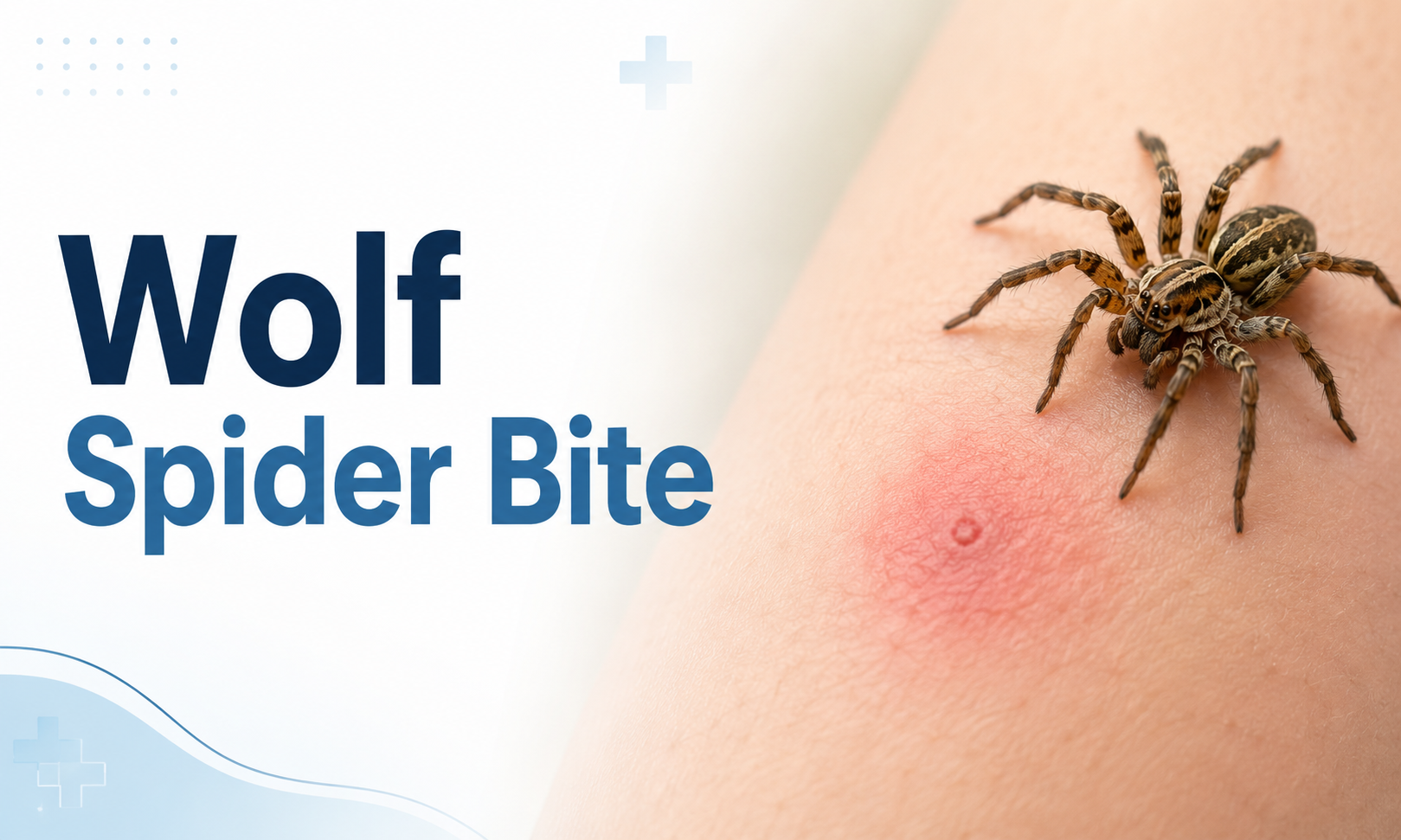
A suspected wolf spider bite usually causes a mild local reaction rather than a dangerous poisoning. The bite may feel like a pinprick or sting and can leave redness, swelling, tenderness, itching, or two tiny puncture marks. Most uncomplicated bites can be managed with basic wound care and a cold compress.
The harder part is knowing whether a wolf spider actually caused the mark. Many people never see the spider bite them, and infections, other insect bites, allergic reactions, and bites from different spiders can look similar. If symptoms are severe, the wound keeps worsening, or the spider was not confidently identified, it is safer to focus on the symptoms rather than the assumed species.
| Get urgent medical help if: you develop trouble breathing, swelling of the face or throat, fainting, severe muscle cramps, rapidly spreading pain, repeated vomiting, significant weakness, fever with a worsening wound, or severe symptoms in a young child. Do not cut the bite, try to suck out venom, or apply a tourniquet. |
Key Takeaways
- Wolf spiders can bite when trapped against the skin or handled, but they are not generally aggressive toward people.
- A typical bite causes local pain, redness, swelling, itching, or mild numbness and is usually not life-threatening.
- Wash the area with soap and water, apply a cloth-wrapped cold pack, elevate the affected limb if practical, and use appropriate over-the-counter symptom relief if needed.
- Do not assume every unexplained red bump, blister, or painful skin lesion is a spider bite. Many suspected spider bites are never confirmed.
- A wound that develops increasing redness, drainage, fever, severe pain, or tissue breakdown needs medical evaluation because infection or another diagnosis may be responsible.
- Breathing difficulty, severe generalized symptoms, intense muscle cramping, or rapidly worsening illness should be treated as an urgent medical problem regardless of the suspected spider species.
- If you can safely photograph the spider without handling it, the image may help identification. Do not risk another bite trying to capture it.
What Does a Wolf Spider Bite Look Like?
A wolf spider bite usually resembles a minor insect bite. The skin may become red, mildly swollen, itchy, or tender. Some people notice a brief sharp pain when the spider bites, followed by localized soreness. Two tiny fang marks may be visible, but they are often too small to see.
There is no single appearance that proves a bite came from a wolf spider. A photograph of the skin alone usually cannot identify the species. The strongest evidence is seeing the spider bite and having the spider or a clear photograph identified accurately.
| Feature | Typical mild bite | Reason to get checked |
| Pain | Mild stinging or soreness near the bite | Severe or spreading pain |
| Redness | Small area around the puncture | Rapidly expanding redness or red streaks |
| Swelling | Localized puffiness | Major swelling or swelling involving the face or throat |
| Itching | Mild to moderate | Widespread hives with breathing or dizziness symptoms |
| Skin damage | Usually no progressive tissue destruction | Blistering, ulceration, black tissue, or drainage |
| Whole-body symptoms | Usually absent | Fever, severe weakness, vomiting, cramps, fainting, or breathing trouble |
Are Wolf Spider Bites Dangerous?
For most healthy adults, a confirmed wolf spider bite is expected to cause a local reaction rather than a medically serious envenomation. Wolf spiders use venom to subdue prey, but their bites are not generally considered among the major medically dangerous spider bites in the United States.
That does not mean every bite can be ignored. Any break in the skin can become infected, and a person can have an unusual allergic reaction. Children, older adults, and people with serious medical conditions may also deserve a lower threshold for medical advice when symptoms are more than mild.
What Should You Do Right After a Wolf Spider Bite?
If the spider is still nearby, move away rather than trying to handle it. Once you are safe, first aid is simple and similar to care for many minor spider bites.
- Wash the bite gently with soap and water.
- Apply a cloth dampened with cold water or a wrapped ice pack to reduce pain and swelling.
- Elevate the bitten arm or leg when practical.
- Avoid scratching, squeezing, cutting, or repeatedly pressing on the site.
- Use an over-the-counter pain reliever or antihistamine only if it is appropriate for you and the label allows it.
- Watch the area over the next several days for increasing redness, swelling, drainage, fever, or worsening pain.
MedlinePlus recommends washing spider bites, using cold compresses, and taking appropriate over-the-counter pain relief for minor bites, while seeking medical treatment for severe symptoms.
What Should You Not Put on the Bite?
Avoid caustic chemicals, undiluted essential oils, bleach, strong acids, or products that cause burning. These can create a skin injury that is worse than the original bite. Antibiotic ointment is not automatically necessary for every clean minor bite, and antibiotics do not treat spider venom.
For readers comparing skin-cleansing products, Twiage Health’s guide to hypochlorous acid spray explains what the ingredient is designed to do and why a product should be used only according to its labeled purpose rather than as a universal bite remedy.
How Long Does a Wolf Spider Bite Take to Heal?
A minor local reaction should gradually settle over several days. Itching or tenderness can linger after the initial swelling improves. The exact timeline depends on how much skin trauma occurred, whether the area was scratched, and whether a secondary infection develops.
A bite that becomes more painful, larger, hotter, or more swollen after initially seeming mild deserves attention. Progressive ulceration or blackening is not something to assume is normal for a wolf spider bite.
Can a Wolf Spider Bite Get Infected?
Yes. The puncture itself is small, but scratching can break the skin further and bacteria can enter. Infection may cause steadily increasing warmth, redness, swelling, pain, pus, or fever.
Some skin infections are mistakenly labeled spider bites from the beginning. If there was no witnessed spider bite and the lesion is getting larger or draining, a clinician may need to evaluate it for bacterial infection or another skin condition.
How Is a Wolf Spider Bite Different From a Brown Recluse Bite?
A typical wolf spider bite causes mild local symptoms and does not usually produce progressive tissue destruction. Brown recluse bites can sometimes cause a blister or ulcer and, rarely, more serious systemic effects.
However, you cannot reliably distinguish species from a skin lesion alone. Geography also matters because brown recluse spiders have a limited U.S. range. If the spider was not identified, a worsening wound should be assessed on its clinical features rather than labeled as one species based on internet photographs.
How Is It Different From a Black Widow Bite?
Black widow venom can cause symptoms beyond the bite site, including severe muscle pain or cramping, abdominal or chest pain, sweating, nausea, and restlessness. Those symptoms are not typical of a mild wolf spider bite and need prompt medical attention.
CDC and NIOSH first-aid guidance for venomous spider bites recommends staying calm, washing with soap and water, applying cold, elevating the bite when possible, and not trying to remove venom.
When Should You See a Doctor?
- The spider might have been a widow or recluse rather than a wolf spider.
- The bite is on the face, near the eye, or inside the mouth.
- Pain, redness, or swelling keeps getting worse instead of better.
- The skin develops a blister, ulcer, black area, or drainage.
- You develop fever, chills, weakness, repeated vomiting, or severe muscle cramping.
- A child has significant symptoms.
- You have trouble breathing, throat swelling, fainting, or other emergency allergy symptoms.
What if You Were Bitten by a Wasp Instead?
A sudden painful sting outdoors is sometimes blamed on a spider even when a wasp or other insect was responsible. Wasps can sting repeatedly and more commonly cause immediate burning pain and a raised swollen area.
Twiage Health’s wasp sting treatment guide explains local swelling, home care, and the emergency signs of anaphylaxis after an insect sting.
How Can You Avoid Wolf Spider Bites?
- Shake out shoes, gloves, towels, and clothing that have been stored in garages, sheds, basements, or outdoor areas.
- Wear gloves when moving firewood, boxes, rocks, or stored materials.
- Reduce clutter where spiders can hide.
- Seal gaps around doors, windows, and utility openings.
- Avoid handling spiders with bare hands, even when you believe the species is harmless.
Common Questions About Wolf Spider Bites
Do wolf spider bites cause necrosis?
Progressive tissue death is not considered a typical feature of a wolf spider bite. A worsening ulcer, blister, or black area should be medically evaluated rather than assumed to be normal.
Can a wolf spider bite make you sick?
Most cause only local symptoms. Significant nausea, fever, severe weakness, intense cramping, breathing trouble, or other whole-body symptoms deserve medical evaluation.
Do you need antibiotics for a wolf spider bite?
Not routinely. Antibiotics treat bacterial infection, not venom. They may be prescribed if a clinician finds evidence of a secondary infection.
Should you catch the spider?
Only if it can be done without risk. A clear photograph taken from a safe distance can be useful. Do not handle or chase a spider and risk another bite.
Can you identify a wolf spider bite from a photo?
Usually not with certainty. Many bites, rashes, and skin infections look alike. Identification is much stronger when the spider itself was seen and accurately identified.
The Bottom Line
A wolf spider bite is usually a minor local injury that causes temporary pain, redness, itching, or swelling. Wash the area, use a cold compress, elevate the limb if practical, and monitor the skin while it heals.
The bigger risk is assuming that every unexplained or worsening skin lesion came from a harmless wolf spider. Seek care when the wound is progressively worsening, infection signs appear, severe systemic symptoms develop, or the spider could have been a medically important species. For emergency symptoms such as trouble breathing, throat swelling, fainting, or severe rapidly spreading illness, call 911.