

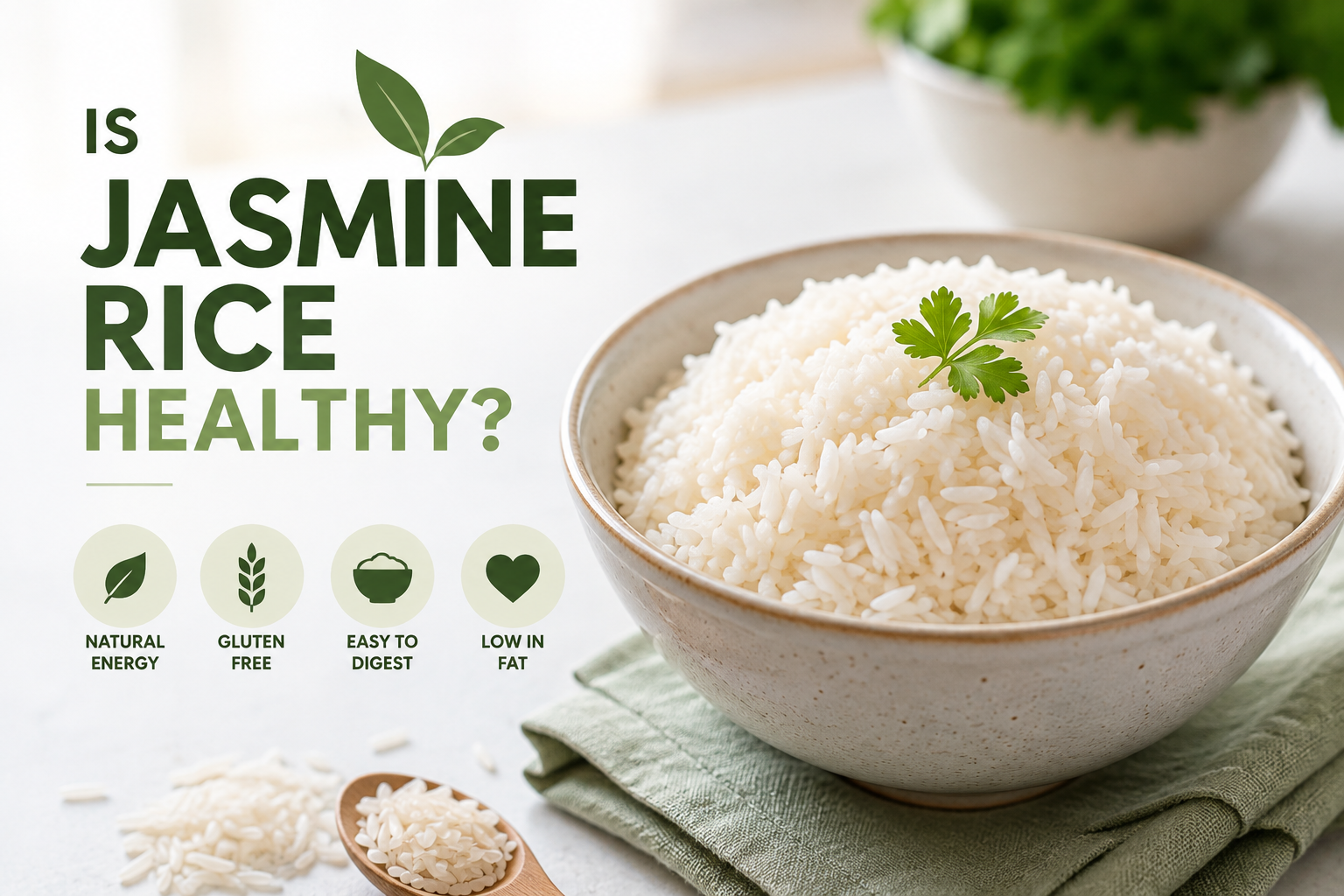
Jasmine rice can be part of a healthy diet. White jasmine rice is an easy-to-digest source of carbohydrate and energy, while brown jasmine rice provides more fiber and keeps more of the grain’s naturally occurring nutrients.
Updated for a U.S. audience in 2026
If you are wondering is jasmine rice healthy, the answer is yes for most people, especially when the serving fits the rest of the meal. Jasmine rice is a fragrant long-grain rice that provides carbohydrate for energy and pairs easily with vegetables, beans, eggs, fish, chicken, tofu, and other nutrient-dense foods.
The biggest nutritional difference is not jasmine versus another aromatic rice. It is usually white versus brown. White jasmine rice has had the bran and germ removed, which gives it a softer texture and longer shelf life but also lowers its fiber content. Brown jasmine rice keeps the bran layer and is a whole-grain option.
Key Takeaways
- Jasmine rice can fit a healthy eating pattern when portions are balanced with protein, vegetables, and other nutrient-dense foods.
- White jasmine rice is mostly carbohydrate and is relatively low in fiber, so a large bowl eaten by itself is less balanced than a mixed meal.
- Brown jasmine rice keeps the bran layer and generally provides more fiber and micronutrients than white jasmine rice.
- Jasmine rice is naturally gluten-free, although packaged rice mixes can contain gluten-containing seasonings or additives.
- People managing diabetes or insulin resistance may do better with smaller portions, brown jasmine rice, and meals that include protein, healthy fat, and vegetables.
- Rice can contain inorganic arsenic, so eating a variety of grains is a practical way to reduce repeated exposure while improving dietary variety.
What Is Jasmine Rice?
Jasmine rice is an aromatic long-grain rice best known for its soft texture and floral, popcorn-like aroma after cooking. It is strongly associated with Thai cuisine but is also widely used across Southeast Asian cooking and in everyday U.S. meals.
You can buy jasmine rice as polished white rice or as brown jasmine rice. Both come from the same basic grain type, but processing changes their texture, cooking time, fiber content, and nutrient profile.
What Is the Nutrition Profile of Jasmine Rice?
Cooked white jasmine rice is primarily a carbohydrate food with a modest amount of protein and very little fat. Fiber is low because the bran has been removed. Enriched white rice may also contain added iron and B vitamins such as folic acid, thiamin, and niacin.
For detailed nutrient values, the U.S. Department of Agriculture maintains FoodData Central, its comprehensive food-composition database. Exact values vary by brand, enrichment, cooking method, and serving size.
White Jasmine Rice vs. Brown Jasmine Rice
| Feature | White jasmine rice | Brown jasmine rice |
| Processing | Bran and germ removed | Bran retained |
| Fiber | Lower | Higher |
| Texture | Soft and tender | Chewier and nuttier |
| Cooking time | Usually faster | Usually longer |
| Blood sugar impact | Often raises glucose more quickly | Fiber may slow digestion somewhat |
| Best fit | Easy digestion, quick meals, balanced mixed dishes | Whole-grain intake, added fiber, more texture |
What Are the Health Benefits of Jasmine Rice?
1. It Provides Useful Carbohydrate for Energy
Carbohydrate is the body’s preferred fuel for many activities, including moderate and high-intensity exercise. Rice can be especially practical for active people because it is easy to portion, easy to combine with protein, and generally well tolerated.
There is no need to avoid rice simply because it contains carbohydrates. The amount you eat and what you pair it with matter more than labeling the food itself as good or bad.
2. It Is Naturally Gluten-Free
Plain jasmine rice does not contain gluten, making it suitable for people who avoid wheat, barley, and rye. People with celiac disease should still check flavored rice mixes, sauces, broths, and seasoning packets because those added ingredients can contain gluten.
3. Brown Jasmine Rice Adds Whole-Grain Fiber
Brown jasmine rice keeps the bran and germ, giving it more fiber than the white version. Fiber can support bowel regularity, help meals feel more filling, and contribute to an overall eating pattern rich in plant foods.
That does not mean white rice is unhealthy. It simply means brown jasmine rice offers an extra nutritional advantage when you tolerate whole grains well and want more fiber.
4. Rice Works Well in Balanced Meals
Jasmine rice becomes much more nutritionally complete when it is one component of the plate rather than the entire meal. A rice bowl with vegetables, lean protein, and a source of healthy fat offers more fiber, protein, vitamins, minerals, and staying power than rice alone.
Is Jasmine Rice Good for Weight Loss?
It can be. Weight loss depends on your overall calorie intake and eating pattern, not whether one food appears on the menu. Jasmine rice is easy to overeat because cooked rice is soft, compact, and quick to eat, so serving size matters.
A practical approach is to keep rice as one part of the meal and add vegetables and protein around it. That usually creates more volume and satiety without requiring you to eliminate a food you enjoy.
If you are building lighter meals or snacks around your daily calorie target, TwiageHealth’s low calorie snacks guide offers higher-protein and higher-fiber options that can complement a balanced eating plan.
Is Jasmine Rice Healthy for Diabetes?
White jasmine rice can raise blood glucose relatively quickly because it is rich in digestible starch and low in fiber. That does not automatically make it off-limits for everyone with diabetes, but portion size and meal composition become especially important.
Pairing rice with non-starchy vegetables, beans, eggs, fish, chicken, tofu, or another protein source can make the meal more balanced. Brown jasmine rice may also be useful when a higher-fiber whole grain fits your glucose plan and digestion.
If you use insulin or glucose-lowering medication, carbohydrate portions should be individualized with your clinician or registered dietitian rather than copied from a generic meal plan.
Is White Jasmine Rice Unhealthy?
No. White jasmine rice is a refined grain, but refined does not mean poisonous or nutritionally useless. It provides energy, is often enriched with B vitamins and iron, and can be a practical food during illness, high-energy activity, or times when a lower-fiber food is easier to digest.
Its main limitation is that it offers less fiber than brown rice. A diet built mostly around refined grains can crowd out fiber-rich foods, so variety is important.
Is Brown Jasmine Rice Healthier?
For most adults who tolerate whole grains, brown jasmine rice has the nutritional edge because it keeps the bran and germ. That means more fiber and a broader mix of naturally occurring nutrients.
However, the healthier choice is not always the same for every situation. People following a temporary low-fiber diet, recovering from certain digestive problems, or dealing with some bowel conditions may tolerate white rice better.
Does Jasmine Rice Contain Arsenic?
Rice absorbs more arsenic from soil and water than many other crops. This does not mean people need to stop eating rice, but it is another reason to rotate among grains rather than relying on rice at nearly every meal.
The U.S. Food and Drug Administration says rice can still be eaten as part of a balanced diet and recommends dietary variety as a way to support nutrition while reducing repeated exposure to contaminants. See the FDA advice on limiting arsenic exposure from food.
The FDA also notes that cooking rice in excess water and draining it can reduce inorganic arsenic, although this method can also wash away some nutrients from enriched white rice. For most adults, varying grains such as oats, quinoa, barley, corn, and wheat is a simpler everyday strategy.
Should You Rinse Jasmine Rice Before Cooking?
Rinsing can remove loose surface starch and change the final texture, which is why many cooks rinse jasmine rice until the water is less cloudy. Whether you rinse for texture is largely a cooking preference.
Do not assume repeated rinsing makes rice nutritionally superior. Enriched white rice can lose some added vitamins and minerals when aggressively rinsed.
What Is the Healthiest Way to Eat Jasmine Rice?
- Keep the serving proportional to your hunger, activity level, and health goals.
- Pair rice with a protein such as beans, tofu, eggs, fish, chicken, or lean meat.
- Add vegetables for fiber, volume, potassium, vitamin C, folate, and other nutrients.
- Choose brown jasmine rice regularly if you want more whole grains and tolerate the extra fiber.
- Watch calorie-dense extras such as large amounts of coconut milk, oil, butter, fried toppings, or sugary sauces.
- Rotate rice with other grains during the week rather than making one grain your only carbohydrate source.
Does Jasmine Rice Provide Enough Vitamins and Minerals?
Rice contributes some micronutrients, but it should not be expected to cover the full vitamin and mineral needs of the diet. The rest of the plate matters much more.
If you are evaluating whether your overall diet has nutrient gaps, TwiageHealth’s guide to the best gummy multivitamin for women explains why supplements can fill selected gaps but do not replace protein, fiber, healthy fats, fruits, vegetables, and whole grains.
Common Questions About Jasmine Rice
Is jasmine rice healthier than regular white rice?
They are nutritionally similar when both are polished white rice. Jasmine mainly differs in aroma, texture, and culinary use rather than being a completely different nutritional category.
Is jasmine rice healthier than basmati rice?
Neither is automatically healthier. Both can fit a balanced diet. Their blood sugar response and nutrient profile can vary by processing, variety, cooking method, and serving size.
Can I eat jasmine rice every day?
You can, but dietary variety is usually better. Rotating rice with other whole grains and starches can improve nutrient variety and reduce repeated exposure to contaminants found more commonly in rice.
The Bottom Line
Jasmine rice can absolutely be part of a healthy diet. White jasmine rice is a convenient source of carbohydrate and works well in balanced meals, while brown jasmine rice adds more fiber and whole-grain nutrition.
The healthiest approach is not to obsess over whether rice is allowed. Choose a portion that fits your needs, add protein and vegetables, use brown jasmine rice when you want more fiber, and rotate rice with other grains. If you have diabetes or another condition that changes your carbohydrate needs, use an individualized plan rather than a one-size-fits-all serving.
Nutrition Note
This article is for general educational purposes and is not a substitute for personalized nutrition or medical advice. People with diabetes, chronic kidney disease, celiac disease, digestive disorders, or other conditions that affect food choices should follow guidance from their health care professional or registered dietitian.