Tag: Cloudy Urine

  • White Stuff Floating in Urine in Men: What It Can Mean

    White Stuff Floating in Urine in Men: What It Can Mean

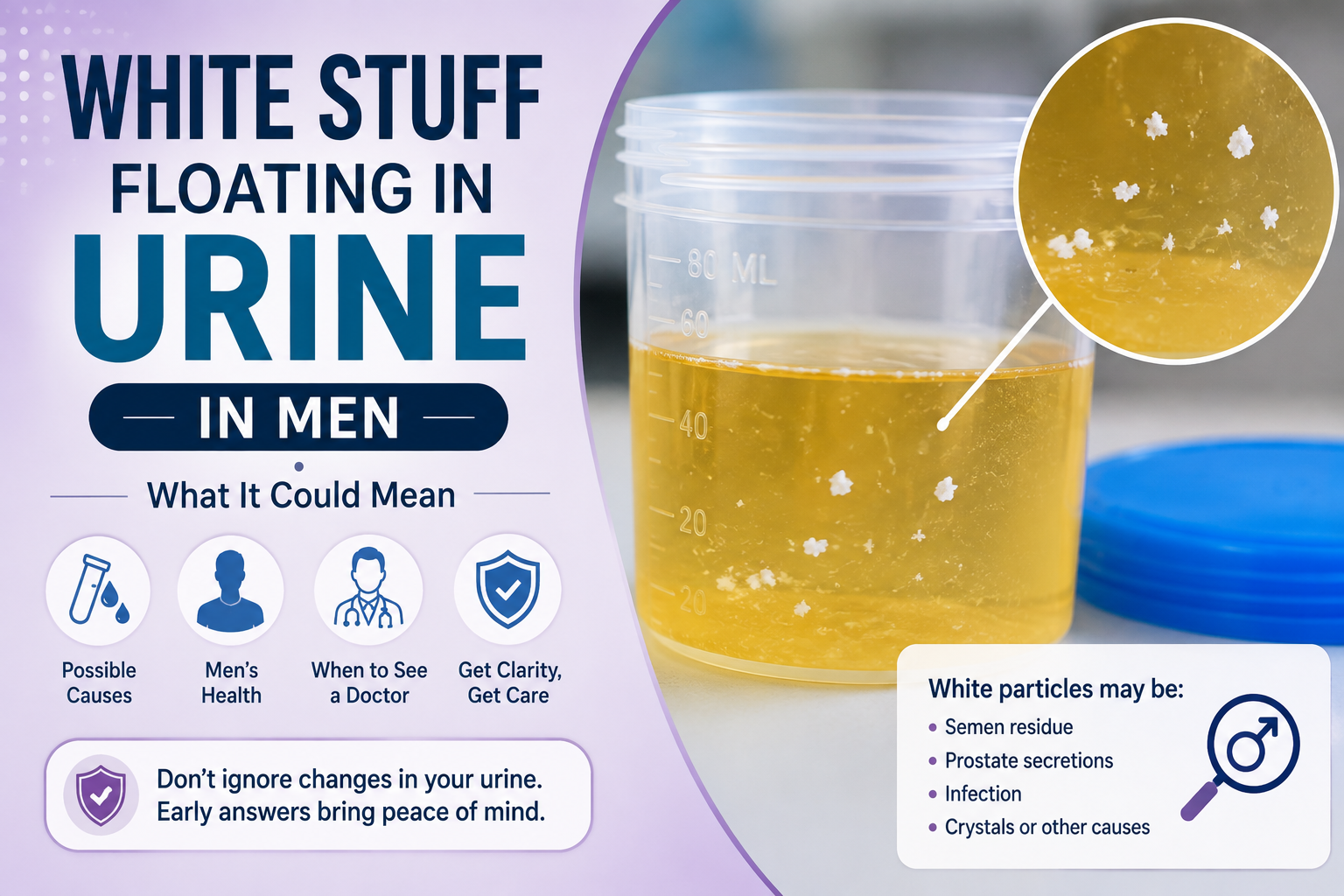
    Seeing white stuff floating in urine in men can be unsettling, especially when it looks like tissue, strings, flakes, sediment, or tiny clumps. The material can come from something as simple as mucus or mineral crystals, but it can also appear with urinary infections, prostatitis, kidney stones, or urethral discharge. Appearance alone cannot identify the cause.

    In men, visible material may come from the urinary tract, the prostate, semen, or discharge from the urethra. Some causes are harmless and temporary, while others need testing and treatment. Persistent changes, pain, burning, fever, blood in the urine, or unusual penile discharge are reasons to seek medical evaluation.

    A useful first step is to notice what the material looks like and whether anything else is happening at the same time, such as burning, pelvic pain, fever, blood in the urine, penile discharge, frequent urination, back or side pain, or symptoms after sex. A urinalysis, urine culture, STI testing, or other evaluation may be needed if the change persists.

    Key Takeaways

    • A small amount of mucus or urinary sediment can be normal and may appear as white threads or flecks.
    • Mineral crystals can become visible in concentrated urine and may look like pale grit or sediment.
    • UTIs, prostatitis, and urethritis can add white blood cells, mucus, pus, or discharge to urine and make it look cloudy or contain white material.
    • Semen can sometimes mix with urine after ejaculation. Retrograde ejaculation can also cause cloudy urine after orgasm.
    • Kidney stones may produce crystals or grit and often cause side, back, abdominal, or groin pain, although small stones may pass with milder symptoms.
    • White material mixed with visible blood, fever, severe pain, inability to urinate, vomiting, or rapidly worsening symptoms needs prompt medical attention.

    What does white stuff floating in male urine usually mean?

    There is no single explanation. In men, white material may be mucus, crystals, semen, inflammatory cells, infection-related discharge, or small amounts of cellular debris. The most likely cause depends on the appearance, timing, symptoms, and medical history.

    What you notice Possible explanations Clues that may go with it
    Thin white threads or wisps Mucus, urethral secretions May be occasional and painless; larger amounts can occur with inflammation or infection
    White or pale grit Urinary crystals, very small stone material More noticeable in concentrated urine; stones can cause flank or groin pain
    Cloudy urine with white specks UTI, prostatitis, crystals, mucus Burning, urgency, frequency, pelvic discomfort, odor, or fever may occur
    White material after sex or orgasm Residual semen or retrograde ejaculation Often linked closely to ejaculation; retrograde ejaculation may cause little or no semen to come out during orgasm
    White, yellow, or green material with penile discharge Urethritis or an STI such as gonorrhea Burning, urethral irritation, discharge, or testicular symptoms may occur
    Tissue-like pieces or material with blood Inflammation, stone-related injury, urinary tract bleeding, rarely damaged urinary tissue Visible blood, clots, severe pain, recent procedure, or significant illness should be evaluated promptly

    Can normal mucus cause white strings in urine?

    Yes. The urinary tract normally produces mucus that helps protect and lubricate its lining. A small amount can enter urine and may look like thin white threads, wisps, or translucent material. MedlinePlus notes that a small to moderate amount of mucus can be normal, while larger amounts may occur with conditions such as a UTI, STI, or kidney stones.

    If the white threads are occasional and there is no pain, fever, odor, blood, discharge, or change in urinary habits, they may not represent a serious problem. Persistent or increasing mucus is more useful to evaluate with a urinalysis than by appearance alone.

    Can dehydration or urine crystals look like white particles?

    Yes. Minerals that are normally dissolved in urine can form crystals. Small amounts of some crystals can occur without disease, and they may be easier to notice when urine is concentrated. Visible material can look like pale sediment, powder, or tiny grains at the bottom of the toilet or specimen cup.

    Crystals do not always mean a kidney stone is present, but some crystal types are associated with stone formation. If sediment repeatedly appears together with sharp pain in the back, side, lower abdomen, or groin, painful urination, blood in the urine, nausea, or difficulty passing urine, a stone becomes more important to consider.

    Can a UTI make male urine look cloudy or contain white material?

    Yes. A urinary tract infection can add white blood cells, bacteria, mucus, and inflammatory debris to urine. That may make the urine look cloudy, milky, or speckled rather than clear. Typical bladder infection symptoms include burning during urination, frequent or urgent urination, lower abdominal discomfort, and cloudy, bloody, or strong-smelling urine. NIDDK explains the symptoms, diagnosis, and treatment of bladder infections in adults.

    UTIs are less common in men than in women, so urinary infection symptoms in a man are generally worth discussing with a health care professional. A urine test and culture can help identify whether bacteria are present and guide treatment when antibiotics are needed.

    Can prostatitis cause white particles or cloudy urine?

    It can. Prostatitis is inflammation of the prostate, the gland located below the bladder around the urethra. Depending on the type, prostatitis can cause urinary pain, difficulty urinating, frequent urination, pelvic or genital pain, painful ejaculation, fever, or other symptoms. Inflammation can also increase white blood cells or other material in urine. NIDDK provides an overview of the different types of prostatitis and their symptoms.

    Acute bacterial prostatitis can become serious quickly. Fever, chills, marked pelvic pain, painful urination, or difficulty emptying the bladder should not be managed only by watching the urine at home.

    Can semen make urine look white after sex or masturbation?

    Yes. Small amounts of semen can remain in the urethra after ejaculation and mix with the next urination, which may briefly make urine look cloudy or contain whitish material. If this happens only after sex or masturbation and there are no other symptoms, the timing may explain the change.

    A less common explanation is retrograde ejaculation. In this condition, some or all semen moves backward into the bladder instead of leaving through the penis. The semen then mixes with urine and can make the first urine after orgasm appear cloudy. Men with retrograde ejaculation may notice little or no semen during orgasm. It can occur with diabetes, certain medicines, or after some prostate or urethral procedures.

    Can an STI cause white material in urine?

    Yes. Urethritis, which is inflammation of the urethra, can produce mucus, pus-like material, or penile discharge that mixes with urine. Sexually transmitted infections are common infectious causes. Gonorrhea can cause white, yellow, or green penile discharge in men, and urethritis may also cause burning or itching. CDC STI guidance describes urethritis symptoms and recommended evaluation.

    If white material is associated with penile discharge, burning after a new sexual exposure, a partner with an STI, genital sores, or testicular pain or swelling, testing is more useful than trying to identify the infection from color alone. Many STIs can be mild or asymptomatic, so lack of severe symptoms does not rule them out.

    Can kidney stones cause white flakes or grit?

    Small kidney stones or crystal material can sometimes pass as visible grit or pale particles. Kidney stones are collections of minerals that form in the kidneys and may travel through the urinary tract. The classic symptom is sharp pain in the back, side, lower abdomen, or groin, but smaller stones may pass with less dramatic symptoms.

    Other clues include blood in the urine, a constant need to urinate, burning, nausea or vomiting, cloudy or bad-smelling urine, or passing only small amounts of urine. Fever or chills with suspected stone symptoms can signal infection and should be evaluated promptly.

    Is white tissue in urine the same as a blood clot?

    No. A clot is made from blood and is usually red, dark red, brownish, or jelly-like rather than pure white. Tissue-like material may be mucus, crystals stuck together, inflammatory debris, or cells shed from the urinary tract. Rare conditions can cause actual urinary tissue to pass, but appearance alone is not enough to identify it.

    Visible blood in urine, especially with clots, should be medically evaluated even if it happens only once. Causes range from infection and stones to prostate conditions, trauma, recent procedures, kidney disease, and cancers of the urinary tract. The risk of a serious cause rises with age and certain exposures, including smoking history.

    How do doctors find the cause of white material in urine?

    The evaluation usually starts with the symptoms and timing. A clinician may ask whether the material appears after ejaculation, whether there has been recent sexual exposure, whether urinary pain or fever is present, and whether there is a history of kidney stones, prostate problems, diabetes, urinary procedures, or medications that affect ejaculation.

    • Urinalysis: Checks urine for white blood cells, red blood cells, protein, crystals, bacteria-related findings, and other abnormalities.
    • Urine culture: Can identify bacteria causing a urinary infection and help select an effective antibiotic.
    • STI testing: Urine or swab testing may be used for gonorrhea, chlamydia, and other infections when urethritis is possible.
    • Physical and prostate examination: May be appropriate when symptoms suggest prostatitis, urinary obstruction, or another genital or prostate problem.
    • Imaging: Ultrasound or CT may be considered when kidney stones, obstruction, recurrent blood in urine, or another structural cause is suspected.

    When should a man see a doctor for white particles in urine?

    A one-time episode without symptoms may resolve, especially when the material appears after ejaculation or during dehydration. Recurrent or unexplained changes deserve evaluation, particularly if they last more than a short period or occur with urinary or genital symptoms.

    Get prompt medical care if white material comes with:

    • fever or chills
    • moderate to severe back, side, abdominal, pelvic, or groin pain
    • burning or significant pain while urinating
    • visible blood or blood clots in urine
    • inability to urinate or passing only very small amounts
    • vomiting or inability to keep fluids down
    • new penile discharge after a possible STI exposure
    • painful or swollen testicles
    • rapidly worsening urinary symptoms

    Go to urgent or emergency care if you cannot urinate, have severe pain with fever or chills, are passing substantial blood or clots, become confused or very weak, or have other signs of serious illness.

    What can you do before an appointment?

    • Note whether the material appears every time you urinate or only after sex, exercise, dehydration, or a particular medication.
    • Pay attention to urine color, odor, pain, urgency, discharge, fever, and where any pain is located.
    • Stay normally hydrated unless a clinician has told you to restrict fluids. Do not force excessive water intake to try to flush out an unknown problem.
    • Avoid taking leftover antibiotics. The wrong antibiotic may not treat the cause and can interfere with accurate testing.
    • If an STI is possible, arrange testing and avoid sexual contact that could expose a partner until you have appropriate medical guidance.

    A clear photo of the urine or visible material can sometimes help describe what you saw, but a properly collected urine sample is far more useful for diagnosis.

    Common Questions About White Stuff in Male Urine

    Is white sediment in urine always an infection?

    No. Mucus, crystals, and semen can also create white or cloudy material. Infection becomes more likely when there is burning, frequency, urgency, odor, fever, pelvic pain, or abnormal discharge.

    Why is there white stuff in my urine but no pain?

    Painless white material may be mucus, crystals, semen, or another benign source, but some infections and urinary conditions can also be mild at first. Repeated unexplained episodes are worth discussing with a clinician.

    Can dehydration cause white particles?

    Concentrated urine can make mineral sediment and crystals easier to see. Dehydration may therefore contribute to visible grit, but persistent particles should not automatically be blamed on dehydration.

    Can prostate fluid appear in urine?

    Prostate and seminal secretions can mix with urine, especially around ejaculation. Prostate inflammation can also alter urinary findings. Symptoms such as pelvic pain, painful ejaculation, fever, or difficulty urinating make prostatitis more important to consider.

    Can protein in urine look like white flakes?

    Protein in urine more often causes persistent foam or froth rather than visible white flakes. A urine test is needed to determine whether excess protein is present.

    Should I collect the particles for testing?

    Do not handle urine debris unnecessarily. If a clinician wants a sample or suspected stone fragment, follow the collection instructions they provide. A clean-catch urine specimen is usually the first test.

    What is the bottom line?

    White stuff floating in male urine can come from normal mucus, concentrated urine crystals, semen, a urinary infection, prostatitis, urethritis, an STI, or kidney stone material. The color and shape alone cannot reliably tell these causes apart.

    If the change is brief, painless, and clearly linked to ejaculation or dehydration, it may be harmless. If it keeps happening or comes with burning, discharge, fever, blood, pelvic pain, flank pain, testicular symptoms, or difficulty urinating, a urinalysis and medical evaluation can identify the cause and guide the right treatment.

    Medical Note

    This article is for general educational purposes and is not a substitute for medical advice, diagnosis, or treatment. New or persistent urinary changes, visible blood, severe pain, fever, or inability to urinate should be assessed by a qualified health care professional. Medical guidance was updated using current NIDDK, CDC, and MedlinePlus information.