

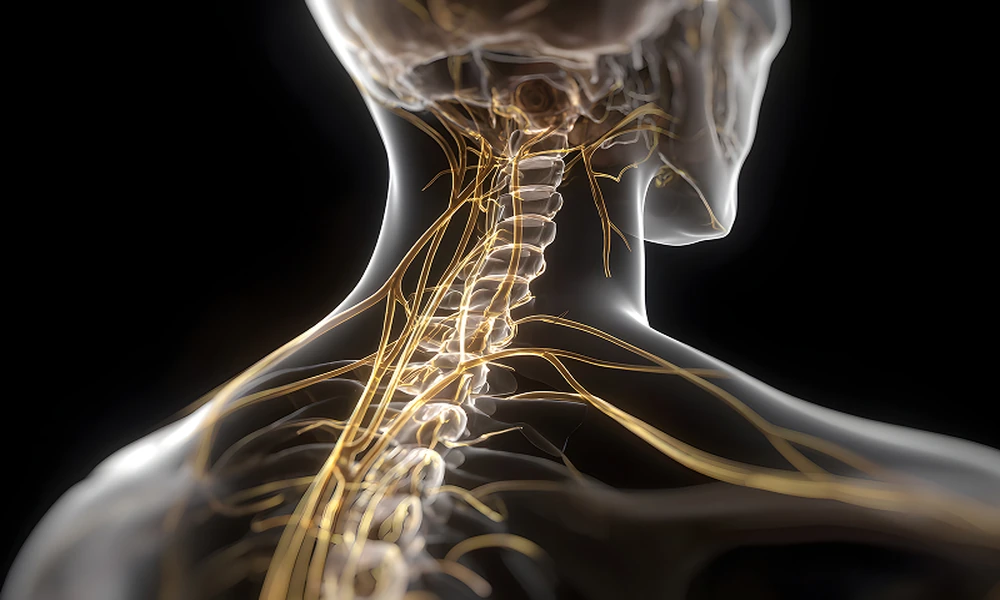
Pain does not always remain close to the area where a spinal problem begins. Nerve irritation can produce symptoms that travel along the path of an affected nerve, creating pain, tingling, numbness or weakness in another part of the body.
Radicular pain can occur when a nerve root becomes irritated or compressed. In the cervical spine, symptoms may travel from the neck into the shoulder, arm or hand. Cervical radiculopathy can involve pain, sensory changes, weakness or altered reflexes.
Recognising these patterns does not establish a diagnosis. However, it can help people explain their symptoms more clearly and understand when medical assessment may be appropriate.
1. Pain Travels From the Neck Into the Arm
One of the most noticeable signs is pain that appears to travel from the neck or shoulder area into the arm.
The distribution can vary according to the nerve root involved. Some people describe burning, shooting or electric-like sensations, while others experience a deeper ache.
Record where the pain begins and how far it travels. This information can help a clinician assess whether the symptoms follow a nerve-related pattern.
2. Numbness or Tingling Appears
Pins and needles or reduced sensation in the arm or hand can accompany nerve irritation.
Pay attention to where the altered sensation occurs and whether it remains constant. Note if particular neck positions seem to influence it.
Cervical radiculopathy treatment may produce sensory changes in areas supplied by the affected nerve root.
3. Weakness Develops
Weakness is particularly important because it can indicate neurological involvement.
You may notice difficulty gripping, lifting or performing movements that previously felt routine. Do not assume that weakness is simply due to pain or tiredness if it is new or progressive.
Clinical pathways recommend specialist assessment when neurological deficits are present or progressing.
4. Neck Movement Changes Your Symptoms
Some people notice that particular neck positions affect arm symptoms. Turning, extending or bending the neck may alter the intensity of discomfort.
This pattern can provide useful information during an assessment. Record which movements seem to change the symptoms, but do not repeatedly force painful positions to test them.
A clinician can perform appropriate physical examinations to evaluate movement and neurological function.
5. Symptoms Persist or Interfere With Daily Activities
Persistent symptoms deserve attention, particularly if they interfere with work, sleep, driving or everyday tasks.
Many episodes of cervical radicular symptoms improve over time, but ongoing or debilitating symptoms may require further assessment.
Keep track of whether symptoms are improving, stable or worsening. A simple timeline can be useful during an appointment.
6. Symptoms Progress or Appear With Other Warning Signs
Progressive weakness, significant sensory loss or signs of spinal cord involvement require prompt medical attention.
Other concerning symptoms may include changes in walking, coordination or bladder and bowel function. These symptoms do not necessarily mean that a particular spinal condition is present, but they should not be ignored.
The appropriate urgency depends on the clinical picture.
Symptom Breakdown
Before discussing radicular pain with a doctor, consider noting:
- Where the pain begins
- Where it travels
- Any numbness or tingling
- Changes in strength
- Neck movements that affect symptoms
- How long symptoms have been present
- Whether symptoms are improving or worsening
These details can help make the consultation more informative.
Radicular pain can present through a mixture of radiating pain, altered sensation and weakness. Symptoms that travel from the neck into the arm may be associated with cervical nerve irritation, although a proper assessment is needed to establish the cause. If neurological symptoms are persistent or progressing, discussing cervical radiculopathy treatment with a qualified doctor can help determine the appropriate next step.
Contact Achieve Spine & Orthopaedic Centre to discuss radiating pain, neurological symptoms or other spinal concerns with a specialist.