

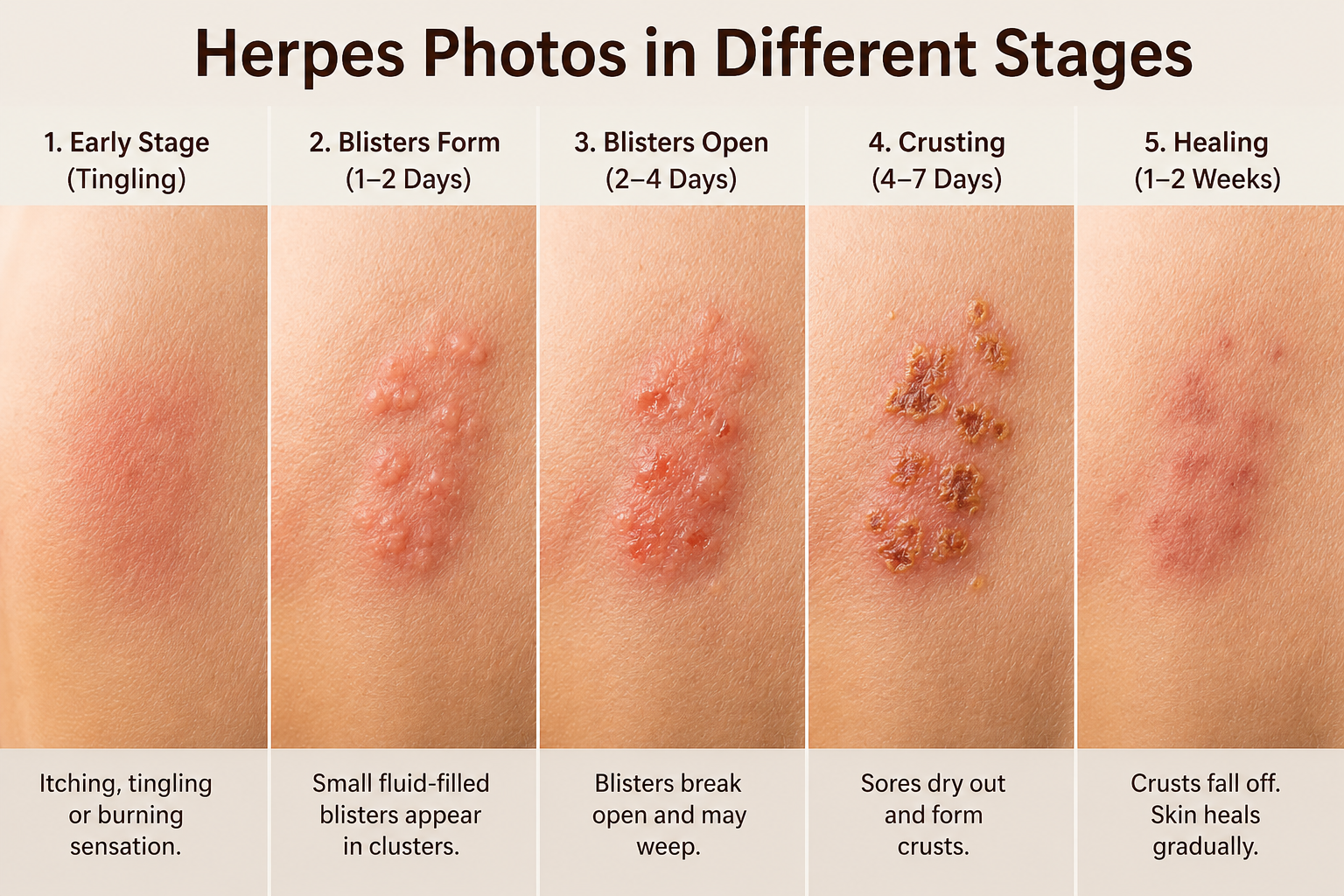
Herpes sores can look very different depending on the day of an outbreak. A typical episode may begin with tingling or redness, progress to grouped fluid-filled blisters, open into shallow sores, and then crust or heal. This 2026 U.S.-focused guide explains the visual stages without treating photos as a substitute for testing.
Updated for a U.S. audience in 2026
People searching for herpes photos in different stages are usually trying to answer one question: does this bump, blister, or sore look like herpes? Photos can help you understand common patterns, but HSV is not always visually obvious. Some outbreaks are mild enough to resemble a pimple, razor irritation, a small cut, or an ingrown hair, while other people have no visible sores at all.
Key Takeaways
- Herpes commonly progresses from tingling, burning, or itching to small bumps, grouped blisters, open sores, crusting, and healing.
- Genital herpes may not form a dry scab in moist areas such as inside the vagina or around the anus, so the healing stage can look different from a cold sore on the lip.
- A first outbreak may last two to four weeks and may include fever, swollen lymph nodes, body aches, or painful urination, while recurrent outbreaks are often shorter and milder.
- Photos cannot confirm HSV because impetigo, shingles, folliculitis, ingrown hairs, canker sores, contact irritation, and other conditions can look similar.
- If a fresh blister or ulcer is present, a clinician can swab the lesion for HSV testing. Testing is most useful before the sore has fully crusted or healed.
- Antiviral treatment can shorten outbreaks and suppress recurrences, but herpes simplex remains in the body after the skin heals.
What Does Herpes Look Like in Different Stages?
There is no perfectly predictable photo sequence, but many symptomatic outbreaks follow a recognizable pattern. The stages can overlap, and several lesions may be at different stages at the same time.
| Stage | What you may see | What it may feel like | Typical change |
| 1. Prodrome | Skin may look normal or slightly red | Tingling, burning, itching, sensitivity | Symptoms can begin before visible lesions |
| 2. Bumps and blisters | Small red bumps or grouped clear fluid-filled blisters | Tenderness, burning, itching | Blisters may enlarge or cluster |
| 3. Open sores | Blisters rupture into shallow red or raw ulcers | Often the most painful stage | Fluid may seep before the surface begins drying |
| 4. Crusting or closing | Dry areas may form yellow-brown or reddish crusts; moist areas may simply close | Pain and burning often lessen | New skin forms beneath the lesion |
| 5. Healing | Crust falls away or ulcer closes, often without a scar | Tenderness fades | Skin color may remain temporarily pink or darker |
Stage 1: Tingling, Burning, or Itching Before a Sore Appears
The earliest stage may have almost nothing to photograph. Hours to a day or two before a recurrent outbreak, some people notice tingling, itching, burning, tightness, or unusual skin sensitivity in the area where sores usually appear. This warning period is called the prodrome.
Stage 2: Small Bumps and Fluid-Filled Blisters
The classic HSV appearance is a small group of closely spaced blisters on a red or swollen base. Individual blisters are usually tiny and can look like clear, whitish, or yellowish beads. In genital areas, the lesions may be so small that they look more like tiny cuts or irritated follicles than obvious blisters.
The American Academy of Dermatology notes that herpes simplex can produce one or more painful fluid-filled blisters that later break open and crust before healing. See the AAD herpes simplex signs and symptoms guide.
Stage 3: Blisters Break and Become Open Sores
Herpes blisters are fragile. When they rupture, they can leave shallow, tender ulcers with a moist red or pink surface. Several small ulcers may sit close together or merge into a larger raw-looking area.
Stage 4: Crusting, Scabbing, or Surface Closure
On dry skin, including the lips and nearby facial skin, the surface often begins to dry and form a thin crust. The crust can appear yellowish, brown, red-brown, or darker depending on skin tone and whether a small amount of blood has dried on the surface.
Stage 5: Healing and Return to Normal Skin
As healing continues, crusts loosen or ulcers close and new skin covers the area. Many HSV sores heal without permanent scarring. Temporary redness, pinkness, or darker pigmentation can remain after the active sore is gone, especially in deeper skin tones.
Healing does not mean the virus has left the body. HSV remains dormant in nearby nerve tissue and can reactivate later. Recurrences are often shorter and affect a smaller area than the first recognized outbreak.
Do Oral and Genital Herpes Look the Same?
They can look very similar because both are caused by herpes simplex viruses. Oral herpes commonly appears along the lip border or around the mouth. Genital herpes can appear on the penis, vulva, vaginal opening, buttocks, upper thighs, perineum, or around the anus.
What Does a First Herpes Outbreak Look Like?
A first noticeable outbreak can involve more lesions and more inflammation than a recurrence. New groups of blisters may continue appearing over several days, so one area can be blistering while another is already ulcerating or healing.
Does Herpes Look Different on Darker Skin?
The structure of the lesion is similar across skin tones, but redness can be less obvious on brown or black skin. Instead of bright red inflammation, the surrounding area may appear purple, gray, deep brown, or simply darker than nearby skin.
What Can Look Like Herpes in Photos?
Many skin conditions can imitate one part of the herpes cycle. That is why matching a photo is much less reliable than testing an active lesion.
- Impetigo: A bacterial skin infection that can begin with blisters or sores and later develop a characteristic honey-colored crust. It is especially common around the nose and mouth in children.
- Shingles: Caused by varicella-zoster virus, a different herpes-family virus. It usually forms painful grouped blisters in a one-sided band rather than recurring in the same small oral or genital area.
- Folliculitis or ingrown hairs: Often centered on individual hair follicles and may look like pimples or pustules after shaving.
- Canker sores: Painful ulcers inside the mouth that are not caused by HSV and are not contagious.
- Contact irritation: Friction, shaving products, lubricants, soaps, or allergic reactions can cause redness, burning, tiny bumps, or raw skin.
Because crusted bacterial sores can be confused with healing herpes, it can help to compare the pattern with a reliable overview of impetigo and its typical progression rather than assuming every yellow crust is HSV.
Another blistering condition worth knowing is shingles. Our right upper quadrant pain guide explains how shingles can begin with burning or tingling pain before a one-sided band of blisters appears on the torso.
Can You Diagnose Herpes From a Photo?
No. A clinician may suspect herpes from the appearance and history, but visual diagnosis can be wrong. If a fresh blister or ulcer is present, a swab test can detect HSV directly and can usually determine whether HSV-1 or HSV-2 is present.
How Are Herpes Outbreaks Treated?
Prescription antivirals such as acyclovir, valacyclovir, and famciclovir can shorten an outbreak when started promptly. People with frequent recurrences may use daily suppressive antiviral therapy to reduce outbreak frequency and lower transmission risk.
For more plain-language explanations of common skin and symptom questions, browse the JiffWellness health library.
At Which Herpes Stage Is It Contagious?
HSV can spread during the tingling prodrome, while blisters and open sores are present, and until the skin has fully healed. Transmission can also occur when no sores are visible because the virus can shed from normal-looking skin.
When Should You See a Doctor for a Possible Herpes Outbreak?
- you have a first episode of painful genital blisters or ulcers
- you are pregnant and develop genital sores or think you may have been exposed to genital herpes
- sores are near the eye or you develop eye pain, redness, light sensitivity, or blurred vision
- you have severe pain, difficulty urinating, dehydration, or widespread sores
- you have a weakened immune system and develop a new blistering eruption
- the lesions are not healing, keep returning, or do not fit the usual pattern
Common Questions About Herpes Photos in Different Stages
Does herpes always start as a blister?
No. It may begin with tingling, burning, redness, tiny bumps, a shallow crack, or very subtle irritation before a recognizable blister forms.
Does genital herpes always scab?
No. Dry external skin may crust, but sores on moist genital or anal surfaces may close and heal without forming a typical dry scab.
Can herpes look like a pimple?
Yes. A small HSV lesion can be mistaken for acne, folliculitis, or an ingrown hair. A swab of a fresh lesion is more reliable than judging by appearance.
Can herpes heal without treatment?
Yes. Many outbreaks eventually heal on their own, but antiviral medicine can shorten symptoms and is particularly important for severe first episodes or people at higher risk of complications.
The Bottom Line
Herpes photos in different stages usually show a progression from subtle tingling or redness to small grouped blisters, open shallow sores, crusting or surface closure, and finally healed skin. The sequence is useful for understanding HSV, but it is not reliable enough to diagnose an individual lesion.
If you have a new blister or ulcer and want to know whether it is herpes, getting the lesion swabbed while it is still fresh is more useful than comparing dozens of online images. Early testing can clarify the diagnosis, and early antiviral treatment can shorten symptoms when HSV is confirmed or strongly suspected.
Medical Note
This article is for general educational purposes and is not a substitute for medical advice, diagnosis, or treatment. New genital ulcers, eye symptoms, severe pain, pregnancy-related herpes concerns, or widespread blistering should be evaluated by a qualified health care professional.