

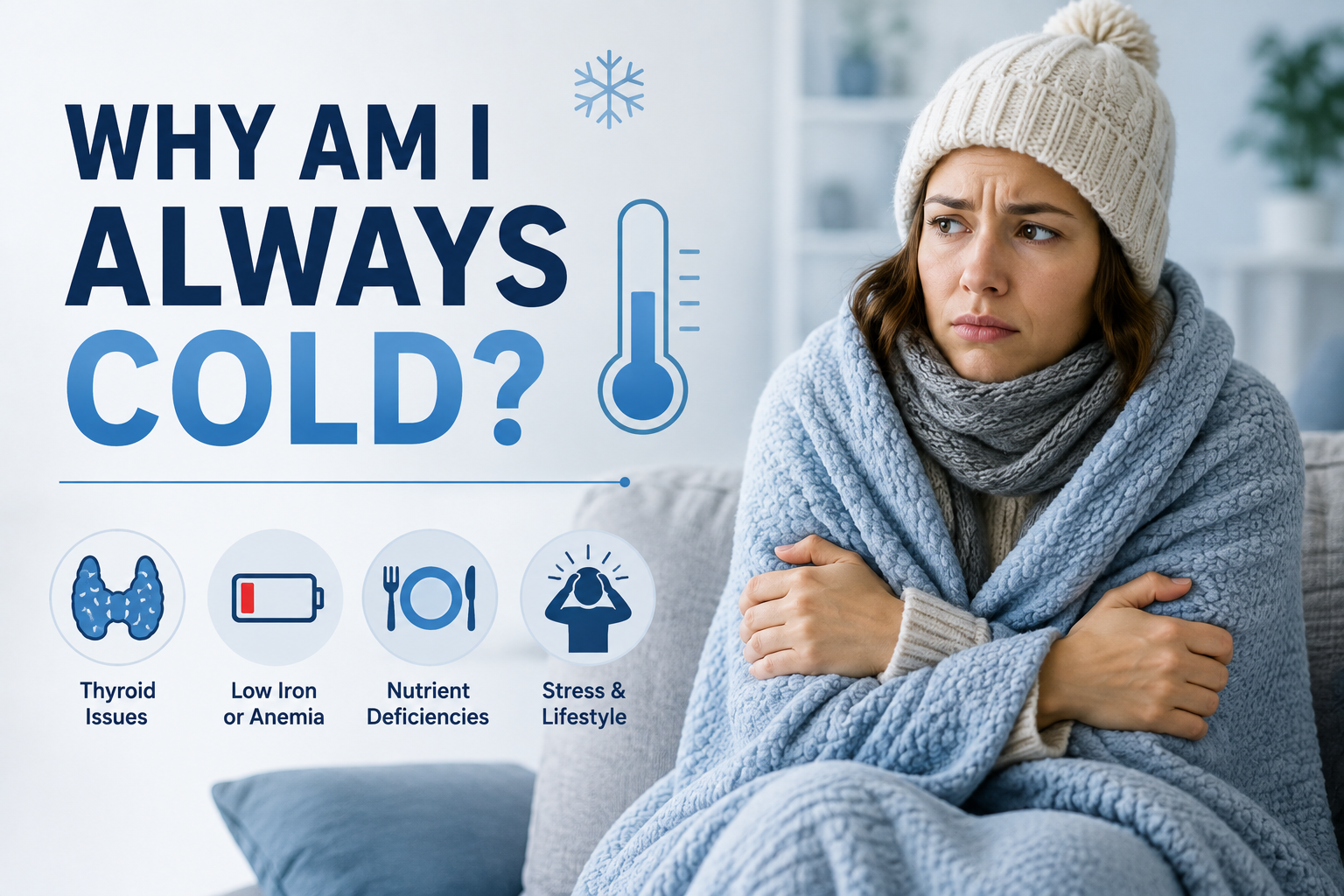
Feeling colder than everyone around you can be harmless, but persistent cold intolerance can also be linked to anemia, an underactive thyroid, low calorie intake, poor circulation, medication effects, and other health issues.
Updated for a U.S. audience in 2026
If you keep asking why am i always cold, the answer depends on whether the sensation is new, affects your whole body or mainly your hands and feet, and comes with symptoms such as fatigue, weight change, pale skin, numbness, menstrual changes, or constipation.
Some people naturally tolerate cold less well than others. But when you are consistently freezing in rooms that feel comfortable to everyone else, especially if the change is new or worsening, it is reasonable to look for an underlying cause rather than simply adding another sweater.
Key Takeaways
- Iron-deficiency anemia and hypothyroidism are two important medical causes of persistent cold intolerance.
- Low body weight, recent weight loss, inadequate calorie intake, and low muscle mass can reduce heat production and insulation.
- Cold hands and feet can come from reduced blood flow, including Raynaud’s phenomenon or peripheral circulation problems.
- Some medications can make the hands and feet feel colder by affecting heart rate or blood vessels.
- Feeling cold by itself cannot diagnose anemia, thyroid disease, or poor circulation. Blood tests and a clinical evaluation may be needed.
- Seek prompt care if coldness occurs with fainting, chest pain, severe shortness of breath, confusion, blue or very pale skin, or a cold painful limb.
What Does Cold Intolerance Mean?
Cold intolerance means feeling unusually uncomfortable in cool environments or feeling cold when other people do not. It is different from briefly feeling chilled after being outside in winter or sitting under strong air conditioning.
The body produces heat through metabolism and muscle activity and conserves it by changing blood flow to the skin and extremities. Problems with oxygen delivery, thyroid hormone, nutrition, circulation, or nerve signaling can change how warm you feel.
What Are the Most Common Reasons You Feel Cold All the Time?
| Possible cause | Other clues | What may be checked | Typical next step |
| Iron-deficiency anemia | Fatigue, pale skin, dizziness, shortness of breath, cold hands and feet | CBC, ferritin, iron studies | Treat the cause of iron deficiency |
| Hypothyroidism | Fatigue, weight gain, constipation, dry skin, thinning hair | TSH and free T4 | Thyroid hormone treatment if confirmed |
| Low weight or low calorie intake | Recent weight loss, low appetite, restrictive eating, reduced muscle mass | Weight trend, diet history, labs if needed | Restore adequate nutrition |
| Raynaud’s phenomenon | Fingers or toes change color with cold or stress | History and exam | Cold protection and evaluation if severe |
| Poor circulation | Cold feet, leg pain with walking, slow-healing wounds | Pulse exam, vascular testing if needed | Treat vascular risk or disease |
| Medication effects | Symptoms started after a new medicine or dose change | Medication review | Discuss options with prescriber |
1. Could Iron-Deficiency Anemia Make You Feel Cold?
Yes. Iron is needed to make hemoglobin, the protein in red blood cells that carries oxygen. When iron deficiency becomes severe enough to cause anemia, tissues receive less oxygen-rich blood and symptoms can include fatigue, dizziness, weakness, pale skin, and cold hands and feet.
The National Heart, Lung, and Blood Institute lists cold hands and feet among the possible symptoms of iron-deficiency anemia. See the NHLBI overview of iron-deficiency anemia.
Iron deficiency is especially worth considering if you have heavy menstrual bleeding, frequent blood donation, a diet low in iron-rich foods, gastrointestinal blood loss, pregnancy, or another reason for ongoing iron loss.
Do not start high-dose iron simply because you feel cold. A complete blood count and ferritin level can help determine whether iron deficiency is actually present.
2. Can an Underactive Thyroid Cause Constant Coldness?
Yes. Thyroid hormone helps regulate how the body uses energy. When the thyroid does not make enough hormone, many body processes slow down and cold intolerance is a common symptom.
Other clues include tiredness, unexplained weight gain, dry skin, constipation, slowed heart rate, muscle aches, thinning hair, and heavy or irregular menstrual periods.
The National Institute of Diabetes and Digestive and Kidney Diseases lists trouble tolerating cold as a common symptom of hypothyroidism. See the NIDDK guide to hypothyroidism.
A thyroid problem cannot be diagnosed from temperature sensitivity alone. Clinicians usually use blood tests such as TSH and free T4 to determine whether thyroid hormone levels are abnormal.
3. Can Losing Weight Make You Feel Colder?
Yes. Body fat provides some insulation, while muscle generates heat. Losing a significant amount of weight can reduce both, particularly when weight loss is rapid or accompanied by reduced calorie and protein intake.
This can happen after illness, surgery, appetite loss, restrictive dieting, or digestive problems that make eating difficult. If cold intolerance began during a period of unintended weight loss, the cause of the weight change matters as much as the cold sensation.
For example, JiffWellness explains why reduced intake can contribute to weight loss after hiatal hernia surgery and when continued weight loss needs follow-up.
4. Could You Simply Be Eating Too Little?
The body needs energy to generate heat. A prolonged calorie deficit, very restrictive diet, skipped meals, or inadequate protein can lower heat production and make cold sensitivity more noticeable.
Cold intolerance from low energy availability is more concerning when it occurs with fatigue, dizziness, loss of menstrual periods, declining exercise performance, hair changes, or continued weight loss.
5. Why Are Only My Hands and Feet Cold?
Cold hands and feet often reflect blood-vessel changes rather than a whole-body temperature problem. When the body conserves heat, small blood vessels in the fingers and toes narrow.
Raynaud’s phenomenon causes an exaggerated response to cold or emotional stress. Fingers or toes may become white, blue, purple, or red and can feel numb, painful, or tingly as circulation changes.
Persistent one-sided coldness, a weak pulse, foot wounds that heal poorly, or leg pain triggered by walking can point to a more significant circulation problem and should be assessed medically.
6. Can Diabetes or Nerve Problems Make You Feel Cold?
Nerve damage can change how temperature is perceived, especially in the feet. Diabetes is one possible cause of peripheral neuropathy, although many other conditions can affect nerves.
If a foot feels cold to you but is warm to someone else’s touch, altered nerve sensation may be part of the explanation. Numbness, burning, tingling, balance changes, or reduced ability to feel injuries are additional reasons to be evaluated.
7. Can Medications Make You Feel Cold?
Some medicines can contribute to cold hands or feet by slowing heart rate, changing blood-vessel tone, or affecting circulation. Beta-blockers are a well-known example.
Do not stop a prescription medicine on your own. If the symptom began after starting a medication or increasing the dose, ask the prescriber or pharmacist whether cold sensitivity is a recognized effect and whether an alternative is appropriate.
8. Are Hormones the Reason Women Feel Cold More Often?
Women may experience temperature changes around the menstrual cycle, pregnancy, and menopause, but persistent cold intolerance should not automatically be blamed on reproductive hormones.
Heavy menstrual bleeding can contribute to iron deficiency, and thyroid disorders can affect both temperature tolerance and menstrual regularity. That overlap is more clinically useful than assuming low estrogen or low progesterone is the direct explanation for feeling cold.
JiffWellness’s guide to symptoms of low progesterone in women explains why thyroid disease, low energy availability, and cycle changes need to be considered separately rather than diagnosed from one nonspecific symptom.
9. Can Stress, Sleep, or Exhaustion Make You Feel Colder?
Stress and poor sleep can change how the nervous system regulates blood vessels and body temperature. Exhaustion may also make ordinary temperature changes feel more uncomfortable.
These factors are reasonable explanations for an occasional cold day, but they should not be used to dismiss persistent symptoms when anemia, thyroid disease, weight loss, circulation problems, or another medical cause is possible.
What Tests Might a Doctor Order If You Are Always Cold?
Testing depends on the rest of your symptoms and medical history. A clinician may check:
- a complete blood count to look for anemia
- ferritin and iron studies when iron deficiency is possible
- TSH and free T4 for thyroid function
- vitamin B12 or folate in selected cases
- blood glucose or A1C when diabetes is a concern
- kidney, liver, or metabolic tests when the history suggests another systemic problem
A physical exam can also reveal clues that blood tests cannot, including weak pulses, skin color changes, thyroid enlargement, low body weight, or signs of poor circulation.
What Can You Do at Home While You Figure Out the Cause?
- Wear layers and keep your hands and feet protected in cold environments.
- Eat regular balanced meals with enough calories, protein, iron-rich foods, and other nutrients.
- Stay physically active if it is safe for you, since muscle activity produces heat and supports circulation.
- Avoid nicotine, which narrows blood vessels and can worsen cold hands and feet.
- Track whether coldness occurs with fatigue, color changes, menstrual changes, weight loss, dizziness, or medication changes.
- Do not use supplements as a substitute for testing when anemia or thyroid disease is possible.
When Should You See a Doctor for Feeling Cold All the Time?
Make an appointment if cold intolerance is new, persistent, getting worse, or interfering with daily life, especially when you also have fatigue, unexplained weight change, constipation, heavy periods, pale skin, dizziness, numbness, or circulation changes.
Seek urgent medical care for severe shortness of breath, chest pain, fainting, confusion, blue or gray lips, severe weakness, or a suddenly cold, pale, painful arm or leg.
Common Questions About Feeling Cold All the Time
Why am I always cold even when everyone else is warm?
You may naturally be more cold-sensitive, but persistent symptoms can also reflect anemia, hypothyroidism, low body weight, low calorie intake, poor circulation, or medication effects.
Can low iron make you feel cold?
Yes. Iron deficiency can lead to anemia, and cold hands and feet are among the possible symptoms.
Does being cold all the time mean I have hypothyroidism?
No. Cold intolerance is common in hypothyroidism, but it is nonspecific. Thyroid blood tests are needed to confirm the diagnosis.
Can dehydration make you feel cold?
Severe dehydration can affect circulation and overall well-being, but chronic cold intolerance is more often investigated for causes such as anemia, thyroid disease, low body weight, or circulation problems.
Why am I cold and tired all the time?
That combination raises the possibility of anemia, hypothyroidism, inadequate calorie intake, sleep problems, chronic illness, or another condition. Persistent symptoms are worth discussing with a clinician.
The Bottom Line
Feeling cold more easily than other people can be normal, but constant or worsening cold intolerance deserves attention when it is paired with other symptoms. Iron-deficiency anemia, hypothyroidism, low body weight, inadequate nutrition, circulation problems, neuropathy, and medications are all possible explanations.
The most useful next step is to look at the pattern rather than trying to diagnose yourself from coldness alone. If you also have fatigue, pale skin, weight change, heavy periods, constipation, numbness, or color changes in the hands and feet, a basic medical evaluation can often narrow the cause quickly.
Medical Note
This article is for general educational purposes and is not a substitute for medical advice, diagnosis, or treatment. Persistent cold intolerance or symptoms suggesting anemia, thyroid disease, circulation problems, or another medical condition should be evaluated by a qualified health care professional.