

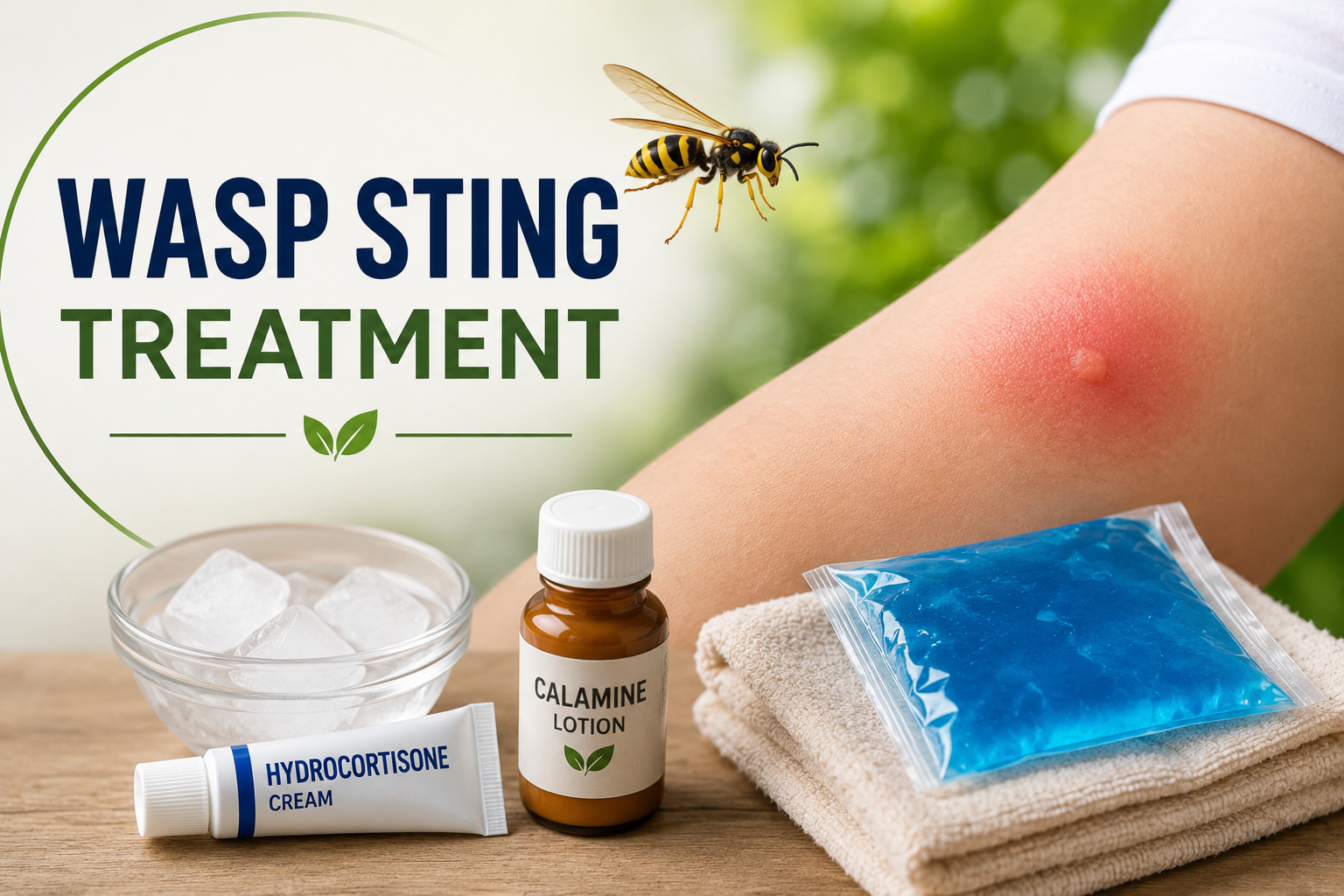
The best wasp sting treatment depends on the reaction. For a typical sting, move away from the insects, wash the skin, cool the area, and treat pain or itching. A severe allergic reaction is different and needs epinephrine and emergency medical care.
Wasps, hornets, and yellow jackets can sting more than once because they usually do not leave a barbed stinger behind. Most stings cause sharp pain, redness, warmth, itching, and swelling around the puncture site. These symptoms often improve with home care, although swelling may become more noticeable over the next day or two.
| Call 911 now if: the person has trouble breathing, throat or tongue swelling, fainting, severe dizziness, or other signs of anaphylaxis. Use prescribed epinephrine immediately if available. Antihistamines are not a substitute for epinephrine. |
Key Takeaways
- Most wasp stings can be treated with soap and water, a cold compress, elevation when possible, and appropriate over-the-counter relief.
- Wasps usually do not leave a stinger behind. If you clearly see one, remove it promptly, but do not dig into the skin searching for it.
- Cold applied for about 10 to 20 minutes at a time can reduce pain and swelling.
- Calamine, 1% hydrocortisone, or an oral antihistamine may help itching from a mild local reaction when appropriate for you.
- Large local swelling can peak after one to three days and does not automatically mean anaphylaxis.
- Breathing trouble, throat swelling, faintness, or rapidly developing whole-body symptoms require epinephrine and emergency care.
What Should You Do Immediately After a Wasp Sting?
Move to a safe area first because wasps can sting repeatedly. Then inspect the skin, wash it with soap and water, and apply a cloth-wrapped cold pack.
| Step | What to do | Why it helps |
| 1. Get away | Move away from the nest or insects. | Prevents additional stings. |
| 2. Check the skin | Look for an obvious stinger, but do not probe. | Wasps usually keep their stinger. |
| 3. Wash | Clean with soap and water. | Keeps the puncture site clean. |
| 4. Cool | Apply a wrapped cold pack for 10 to 20 minutes. | Helps pain and swelling. |
| 5. Elevate | Raise an affected arm or leg when practical. | May reduce swelling. |
| 6. Monitor | Watch for breathing, throat, skin, stomach, or fainting symptoms. | Anaphylaxis can progress quickly. |
Do Wasps Leave a Stinger in Your Skin?
Usually not. Honey bees commonly leave a barbed stinger behind, while wasps and yellow jackets typically withdraw theirs and can sting again. If you do not see a stinger, do not squeeze, cut, or probe the area. If one is clearly visible, remove it promptly.
What Can You Put on a Wasp Sting?
A cold compress is the most useful starting point. Wrap ice or a cold pack in cloth and apply it for about 10 to 20 minutes. Avoid prolonged direct ice contact with the skin.
For itching, calamine lotion or 1% hydrocortisone cream may help. An oral antihistamine can also reduce itching, but some products cause drowsiness. For pain, acetaminophen or ibuprofen may be reasonable for many adults if the label says they are safe for you.
Mayo Clinic’s insect bites and stings first-aid guidance recommends washing the area, applying cold for 10 to 20 minutes, elevating an affected limb, and using standard itch relief for mild reactions.
How Long Does Wasp Sting Swelling Last?
Mild redness and swelling may settle within hours to a few days. A large local reaction can extend well beyond the sting and may keep enlarging for a day or two before improving.
Swelling that stays around the sting, even if it is large, is not the same as anaphylaxis. The concern rises when symptoms involve other parts of the body or affect breathing or circulation.
How Can You Tell a Large Local Reaction From Anaphylaxis?
- Local reaction: pain, redness, itching, warmth, and swelling around the sting.
- Large local reaction: swelling spreads farther along the same arm or leg but without airway or circulation symptoms.
- Anaphylaxis: symptoms beyond the sting site, especially breathing difficulty, throat swelling, fainting, low blood pressure, or several body systems reacting at once.
What Are the Warning Signs of Anaphylaxis?
Anaphylaxis can begin within minutes. Use prescribed epinephrine immediately and call 911 if a severe allergic reaction is suspected.
- Trouble breathing, wheezing, or chest tightness.
- Swelling of the tongue or throat.
- Hoarse voice or difficulty swallowing.
- Widespread hives or swelling away from the sting, especially with other symptoms.
- Severe dizziness, fainting, confusion, or signs of shock.
- Repeated vomiting, intense nausea, diarrhea, or cramping together with other allergic symptoms.
The ACAAI insect sting allergy guide identifies epinephrine as first-line emergency treatment for anaphylaxis and advises immediate medical attention after it is used.
Will Benadryl Stop a Severe Wasp Sting Allergy?
No. An antihistamine may reduce itching or hives, but it does not reliably reverse airway swelling or dangerously low blood pressure. Do not wait to see whether an antihistamine works before using epinephrine when anaphylaxis is suspected.
Do Home Remedies Like Baking Soda or Vinegar Work?
Baking soda paste, vinegar, toothpaste, meat tenderizer, and essential oils are commonly suggested, but evidence that they work better than standard first aid is limited. Cold, clean skin, and appropriate over-the-counter symptom relief are more predictable. Avoid harsh chemicals or concentrated essential oils on broken skin.
When Should You See a Doctor for a Wasp Sting?
- The sting is inside the mouth or throat, or very close to the eye.
- You were stung many times.
- Pain or swelling is unusually severe or continues to worsen.
- Pus, fever, spreading redness, or red streaks suggest infection.
- You develop hives or swelling far from the sting site.
- You have had a serious insect-sting allergy before.
What Should You Do After a Previous Severe Sting Reaction?
An allergist can review the reaction, decide whether venom allergy testing is appropriate, and prescribe emergency epinephrine when indicated. For people with confirmed venom allergy and a significant systemic reaction, venom immunotherapy can greatly reduce the risk of another severe reaction.
How Can You Avoid Another Wasp Sting?
- Keep outdoor food and sweet drinks covered.
- Check open cans or bottles before drinking outside.
- Wear closed-toe shoes for yard work or walking through grass.
- Avoid swatting at wasps; move away calmly when possible.
- Use caution around garbage cans, fallen fruit, eaves, sheds, and known nests.
What Else Belongs in a Practical Self-Care Routine?
Twiage Health also explains pressure points for migraines and how comfort measures fit alongside evidence-based care rather than replacing it.
For people who regularly use supplements, its guide to the best gummy multivitamin for women shows how to compare labels, doses, and product quality with the same safety-first approach.
Common Questions About Wasp Sting Treatment
How long does a wasp sting hurt?
Pain is usually strongest immediately after the sting and then eases. Tenderness, itching, and swelling can last for several days.
Can a wasp sting swell the next day?
Yes. Local swelling can become more noticeable during the first 24 to 48 hours. Sudden throat swelling, breathing trouble, or fainting is different and needs emergency care.
Should I take an antihistamine for a wasp sting?
It can help itching from a mild reaction when safe for you. It is not a substitute for epinephrine during anaphylaxis.
Can a wasp sting get infected?
Yes, especially if the skin is scratched open. Increasing warmth, pus, fever, worsening pain, or spreading redness may need medical evaluation.
Can wasps sting more than once?
Yes. Wasps generally keep their stinger and can sting repeatedly.
When is a wasp sting an emergency?
Call 911 for trouble breathing, tongue or throat swelling, severe dizziness or fainting, or other rapidly developing signs of anaphylaxis. Use prescribed epinephrine immediately when indicated.
The Bottom Line
For most people, wasp sting treatment is simple: get away from the insects, wash the area, apply cold, elevate an affected limb if possible, and use an appropriate over-the-counter option for pain or itching. Remember that wasps usually do not leave a stinger behind.
The situation becomes urgent when symptoms spread beyond the sting and affect breathing, the throat, blood pressure, or several body systems. Anaphylaxis needs epinephrine and emergency medical care. Anyone with a previous serious sting reaction should ask an allergist about a prevention plan.